Sarah Edmonds Seelye

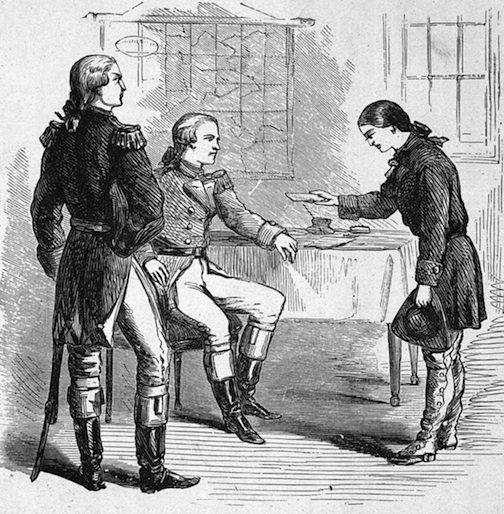
Another Civil War cross-dresser was Sarah Edmonds. She assumed the alias of Franklin Thompson and served with the Union Army. She was a nurse and dispatch carrier.

Edmonds ended up deserting her duties. She had contracted malaria and feared she would be revealed as a woman when she was hospitalized. Nonetheless, she ended up receiving a military pension because of her service. Seelye married L.H. Seelye, raised three children, and died in 1898 in Texas.

This image comes from the State Archives of Michigan and the National Archives.

Civil War Battlefields

Like the American Revolution, some women dressed as men in order to serve in the Civil War. Post-war estimates put the number at about 400, but even at the time Mary Livermore with the U.S. Sanitary Commission wrote:

I am convinced that a larger number of women disguised themselves and enlisted in the service, for one cause or other, than was dreamed of. Entrenched in secrecy, and regarded as men, they were sometimes revealed as women, by accident or casualty. Some startling histories of these military women were current in the gossip of army life.

One of those women was Frances Clayton, who dressed as a man and served many months in the Missouri artillery and cavalry units. The image comes from the Trustees of the Boston Public Library and the National Archives.

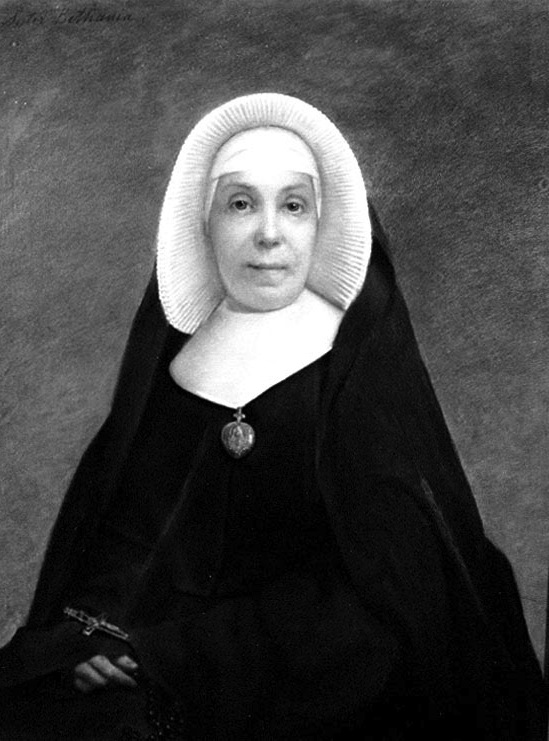
Mother Angela

Eighty Sisters of the Holy Cross served the Navy as nurses aboard the USS Red Rover during the Civil War. The Red Rover was a hospital ship based in the Mississippi River.

They were supervised by Mother Angela Gillespie, founder of the Sisters of the Holy Cross.

This engraving of Mother Angela comes from the U.S. Naval History and Heritage Command.

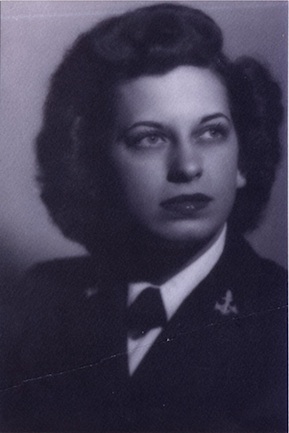
Mary Marovich Ryan

We’re taking a break today from the Navy historical firsts for women to honor an important women to the Homefront Heroines crew.

March 8th is the birthday of the woman who inspired the Homefront Heroines project. Mary Marovich was born in Chicago on March 8th 1921. She enlisted in the WAVES in 1943 and after boot camp at Hunter College she became a Pharmacist’s Mate based at Treasure Island in San Francisco.

Mary worked as a telephone operator in Chicago before enlisting in the Navy. She followed six of her brothers into the service – four were with the Army, and two were first class petty officers in the Coast Guard (her younger brother would serve in the military in the Korean War).

Mary said before enlisting:

I’d really like to wear a six star pin (to honor her brothers), but I can’t find a story that sell them!

Mary married James Warren Ryan, an Army Air Corps pilot, while she was in the service. She left in 1945 after V-J Day and died in 1992.

Happy birthday, Mother!

Aboard the Red Rover

During the Civil War, the the USS Red Rover. a hospital ship based in the Mississippi River, became the first Navy vessel to have women on board. The Catholic Sisters of the Holy Cross served as nurses aboard the ship.

This engraving from Harper’s Bazaar shows  a sister nurse attending a patient bedside in one of the wards. It comes from the U.S. Naval History and Heritage Command.

The First Shipboard Women

By the Civil War, the U.S. Navy realized that it would need help from women. And since nursing was an accepted profession for women, the Navy decided that women could serve aboard ships as an experiment.

But not just any women. Nuns. Specifically the Catholic Sisters of the Holy Cross, who served in aboard the pioneer Naval hospital ship the USS Red Rover.  The ship was based in the Mississippi River.

This engraving from Harper’s Bazaar shows at left a sister nurse attending a patient bedside. It comes from the U.S. Naval History and Heritage Command.

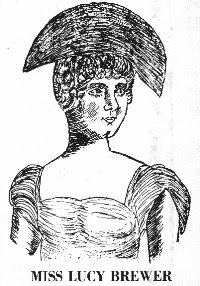
The Mystery of Lucy Brewer

While Deborah Samson is a historically verifiable person, somewhat more mysterious is Lucy Brewer. According to legend, she enlisted in the Marines during the War of 1812, dressed as a man. She was reportedly based onboard the USS Constitution and participated in at least three dramatic sea battles as an expert marksman(woman?).

Brewer later published an autobiographical account of her “experiences.” The Marine Corps regards Brewer’s story as false, because the close living quarters aboard a ship would have made it near impossible to maintain the ruse.

But true or not she does weave a good tale.

This image is from the Marine Corps Web Log.

Who Was First?

Prior to World War II, women weren’t officially allowed in military services (except for nursing, which we’ll talk about in an upcoming blog). That doesn’t mean they didn’t serve. There are stories of women disguising themselves as men in order to serve as early as the Revolutionary War.

Deborah Samson was one of those women. She dressed up as a young man and volunteered to serve in the American Army in 1778. Samson, now known as Robert Shurtleff (or Shirtliff), served for three years and was wounded twice But she went undetected until she became sick with a fever. After that, she received an honorable discharge and eventually received a military pension.

The Leader Resigns

Mildred McAfee would lead the WAVES until August of 1945. During that time, she amassed some pretty impressive military firsts:

  • First female line officer in the Navy (1942)
  • First WAVES Director (1942-1945)
  • First female Navy Captain (1944)
  • Recipient of the Distinguished Service Medal

After she resigned as Director of the WAVES, McAfee would remain active duty until February of 1946.

McAfee met and married the Reverend Dr. Douglas Horton while in the Navy and changed her name to Mildred McAfee Horton. After she left the WAVES, she would first return to the Presidency of Wellesley College, where she would remain until 1948. After she left Wellesely, she became involved with the General Council of Congregational Christian Churches. McAfee also served as a UNESCO delegate, was on the board of directors of the New York Life Insurance Company, the National Broadcasting Company, Radio Corporation of America, and the Ford Foundation’s Fund for the Advancement of Education. She later co-chaired the National Women’s Conference on Civil Rights.

This photograph comes from the Naval Historical Center.

Mildred McAfee

Mildred McAfee attended Vassar College in New York, where she studied economics, sociology and English. She was also active in team sports (hockey and basketball), the Christian association, and student government. She earned an M.A. in sociology from the University of Chicago.

McAfee spent 14 years working in various collegiate administration positions (including Dean of College Women at Oberlin College) before being selected as President of Wellesley College in 1936. She beat out 100 other candidates for the job. She was just 36 years old.

She told Wellesley students:

I envision the function of this college, or any college, to prepare an oncoming generation of students to disseminate truth. It is my conviction that truth is more easily given a hearing if it’s presented by a healthy, well-adjusted, effective human being who see truth in the light of a word philosophy that gives it meaning.

McAfee wasn’t the first female president of Wellesley (that would be Ada Howard, who was also the first president of the school.)

This photograph shows Mildred McAfee (left) with Rear Admiral A. E. Watson and Margaret Disert in August of 1942. It comes from the Naval Historical Center.