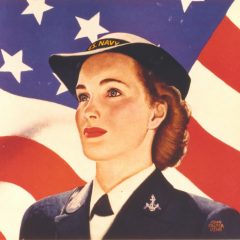
In Training

Susan Ahn Cuddy would be sent to Cedar Falls, Iowa for her training as a WAVE.

You stand out like a sore thumb for one thing ,and so you have to behave properly. But, everyone was very cordial to me and accepting and I don’t think I faced any uh, problems except that many of them didn’t see an Asian before in the Midwest like in Iowa.

After her initial training, Ahn became one of the first women selected at a Link Trainer Instructor.

This photograph comes from the collection of Susan Ahn Cuddy and the Island Mountain Trading Co.

The First Korean American WAVE

Education was important to the Ahn family. Susan Ahn Cuddy attended college in Southern California, and would be both a good student and an active athlete.

But even though she met the qualifications: a college graduate with some work experience, she was turned down by the recruiting officer when she first attempted to enlist as a WAVE officer in 1942.

As she said:

When the Navy program opened up for the women, I was gung-ho.  I was in San Diego and I came up to Los Angeles and tried to be part of it, but it was an officer’s training group and I didn’t make it. Well, I mean it was known that it was because I was Asian and not acceptable.

A woman who knew Ahn intervened, and she was later accepted as an enlisted WAVE.

This photograph is of Susan Ahn’s college field hockey team: she is in the front row, fourth from left.  It comes from the collection of Susan Ahn Cuddy and the Island Mountain Trading Co.

End of the War

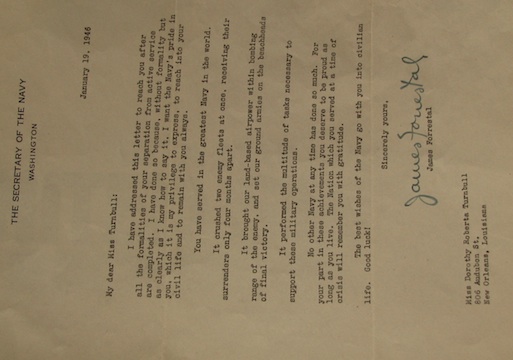
Dorothy Turnbull says the most meaningful thing she got from the Navy was this letter from Secretary of the Navy James Forrestal, which she received after she resigned from the WAVES at the end of the war.

There was no need for me to sell the Navy anymore. I mean to represent it. I felt that they were big now, they could take care of themselves (laughs). That I had nurtured them along?  No, the Navy did more for me than I ever did for it.

After the war, Dorothy returned to college to get an M.A. in counseling. She taught for years, and also counseled veterans.

Shipshape

The reality was that Dorothy Turnbull, and most of the WAVES, spent little or no time about ships. The rumor was that it was unlucky for women to be aboard ships, and Navy policy prohibited women other than the Navy Nurse Corps from serving aboard a ship.

However, the women did do goodwill tours to visit various ships in port, as in this photograph from the Dorothy Turnbull Stewart collection.


Getting the Chiefs on Your Side

Dorothy Turnbull used her southern charm to win over even the most recalcitrant Navy man. She knew that the key to her success was making sure that those in command supported her.

Keeping these people on your team was the main reason for success.  If the old chiefs were with you, you had your foot in the door and you could get people that would maybe just casually call or see him someplace and ask them a question about Navy women or something. He would then be your salesperson, so to speak, even if he was just an old gruff fellow with no polish. He could still support the Navy and the women.

This photograph of Dorothy with two regional Navy commanders comes from the collection of Dorothy Turnbull Stewart.


“A Little Risqué”

Dorothy Turnbull wasn’t above using sex appeal to sell the WAVES – as long as it was wholesome sex appeal.

You see, well, they were showing the audience that we had that had gotten together. They were were showing how the women in the Navy were still women. And ladies. That was the whole thing was to let society know that our girls were their girls. They were mothers, perhaps — well, not mothers. They were daughters and sisters. This was one method of getting something a little risqué — bathing suits.

This photograph of a WAVES recruitment event in Galveston comes from the collection of Dorothy Turnbull Stewart.

A New Orleans Touch

When women got to the recruiting events, Dorothy Turnbull used creative methods to get the women excited about their new jobs in the Navy.

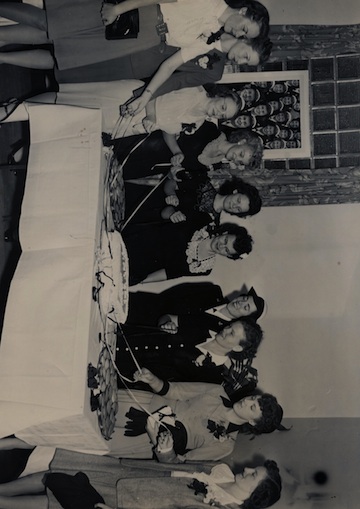
In this photograph, women are pulling charms from a Mardi Gras-style “King Cake.” The charms are of the various jobs the women could hold in the Navy, from yeoman to pharmacist’s mate, gunnery instructor to aerographer and everything in between.

It comes from the collection of Dorothy Turnbull Stewart.

The YWCA Brochure

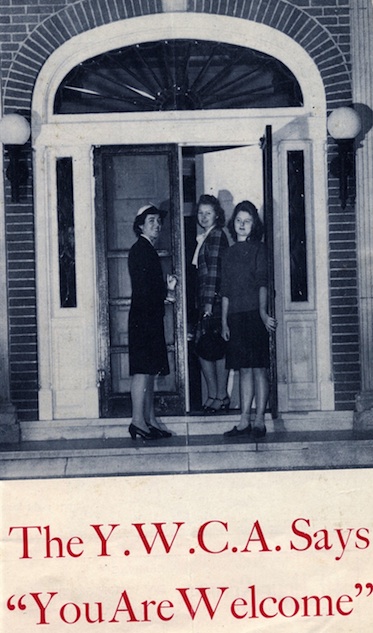
Dorothy Turnbull worked several cities in Southern Texas, including Beaumont, where she coordinated with the local YWCA to host events for recruits.

These ar two of my recruits.  Women who came in to be tested, see, they’d come from these little towns down to Beaumont. They’d come from Port Arthur, Orange. We’d arrange for them to take the tests with me there.  Bring the doctors over, or they’d come over to Houston to take the physical.  They’d do everything before the physical in Beaumont area. Then in Houston, they’d come over and if they passed the physical they could be sworn in right then.

This brochure comes from the collection of Dorothy Turnbull Stewart.

On the Job

Dorothy Turnbull first was stationed in New Orleans, but later transferred to southern Texas to work as a recruiter.

We never had to sell the Navy openly. To me, when I’d go to a radio station and talk about what the Navy women were doing and so forth, talking about their lives before they went in service — see, you had to show their families were behind them. That they were still young ladies, even though they had this uniform on. They weren’t going to be different from their sisters were.  This kind of thing.

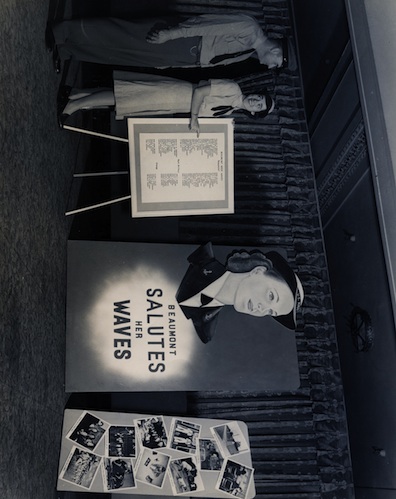
This photograph shows Dorothy on stage at a recruitment event in Texas. It comes from the collection of Dorothy Turnbull Stewart.