 Check out the living quarters for WAVES at NATTC in Norman, Oklahoma. The WAVE shows that folding was an art form – and a necessity.
The photograph comes from the National Archives.
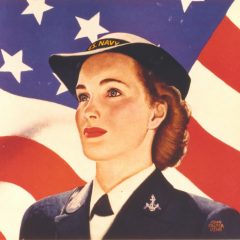
A Blog About Women Who Were Homefront Heroines: the WAVES of World War II
Check out the living quarters for WAVES at NATTC in Norman, Oklahoma. The WAVE shows that folding was an art form – and a necessity.
The photograph comes from the National Archives.

Welcome, November! We wrap up aviation week with the cover of the November, 1944 WAVES Newsletter. It features a WAVE loading parachute rigging gear in a Naval plane.

This is one of our favorite color photographs of the WAVES, showing women trying on the new overseas hat at Naval Air Station New Orleans. The hat would be a uniform addition (the “bucket” style hat would also remain an option during World War II), bu the overseas hat would eventually become the sole uniform standard for Navy women in the post-war years.
The photograph comes from the National Archives.

WAVE Mary Lee Price is on duty in the supply department at Naval Air Station Seattle. Price enlisted on the first anniversary of the WAVES’ founding, July 31, 1943.
The photograph comes from the National Archives.

Things are very neat and tidy in this view of a WAVES locker shown in the barracks at Camp Endicott, Davisville, Rhode Island, 1944.
The photograph comes from the National Archives.

WAVES at work in the control tower at Naval Air Station Norfolk. WAVES in this job needed clear speaking voices, and worked guiding plane traffic.
The photo comes from the National Archives.

WAVE Lt. Tova Peterson Wiley, in this undated photo from the National Archives. Wiley was a part of the first group of WAVE officers in late 1942.
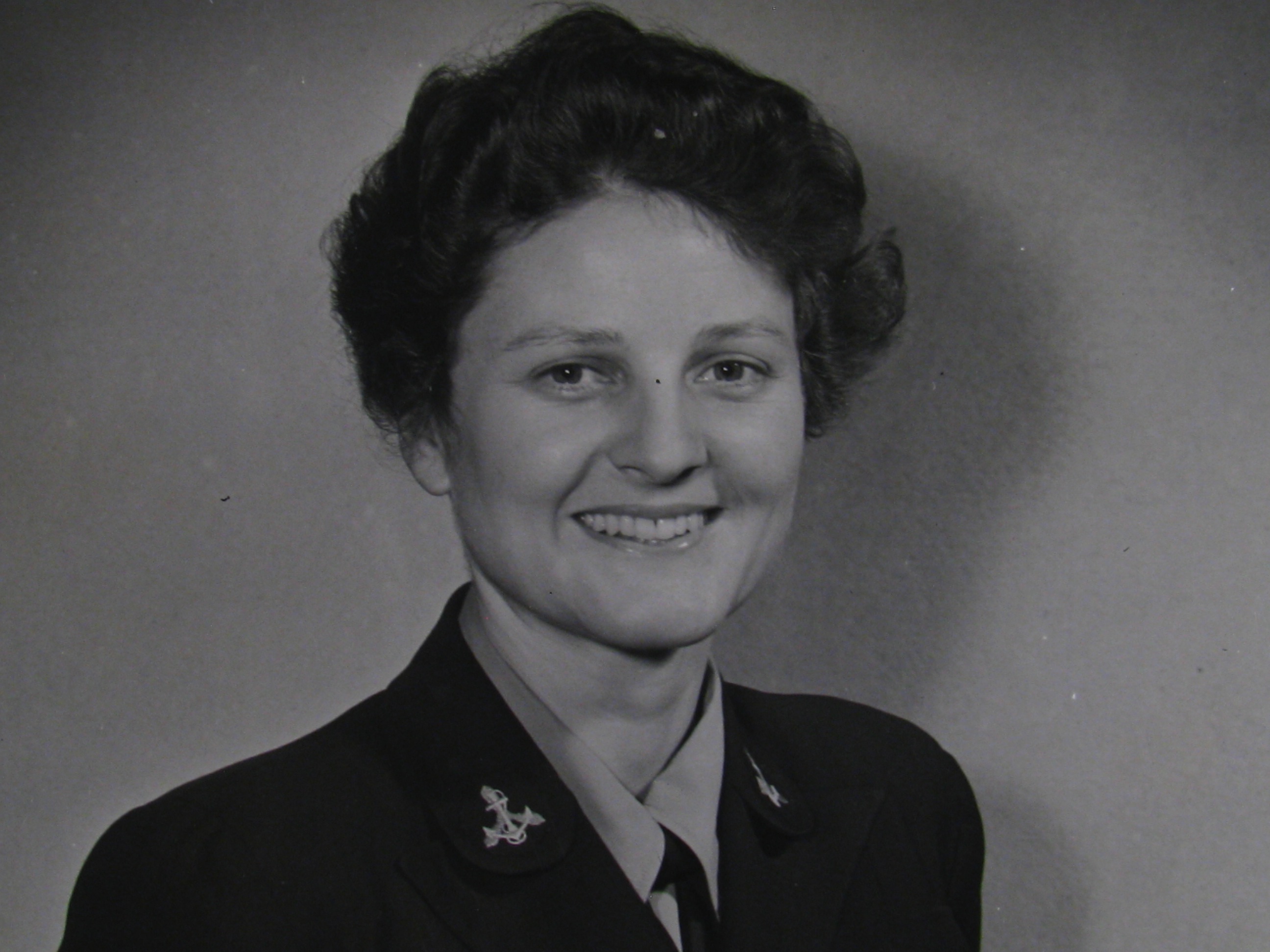
WAVE Lt. Frances Roth, in this undated photo from the National Archives.

This is another shot from the rally we posted about yesterday. Here, more than 4,000 attend the July 1943 rally in Washington, DC celebrating the 1st anniversary of the founding of the WAVES.
It comes from the National Archives.

The Navy’s description of this photo from the Naval Air Gunners School in Hollywood, Florida:
‘Telephone girls’ at a deadly switchboard wear head-phones hooking them to their pupils as the tell the latter the ‘wrong numbers’ they get in firing at targets on the high-speed range. The turrets are identical to the ones the future gunners will occupy on warplanes.
The photo comes from the National Archives.
 Hinges of History