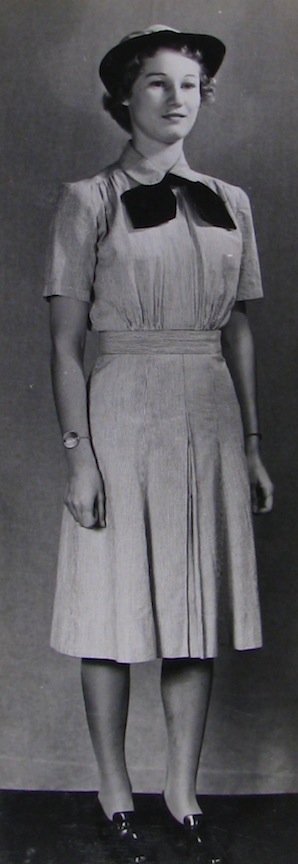
Here’s another view of the new Mainbocher-designed summer uniform for the WAVES, released in October 1943. This view shows the uniform without the jacket. It’s modeled by yeoman Marion Pearson
The photo comes from the National Archives.
A Blog About Women Who Were Homefront Heroines: the WAVES of World War II
Here’s another view of the new Mainbocher-designed summer uniform for the WAVES, released in October 1943. This view shows the uniform without the jacket. It’s modeled by yeoman Marion Pearson
The photo comes from the National Archives.

In October, 1943, the WAVES debuted new Mainbocher-designed uniforms, to be used in summer and at warm weather locales.
Above, WAVE officer Mary C. Broughton (left) and yeoman Marion Pearson (right) model the new seersucker uniforms.
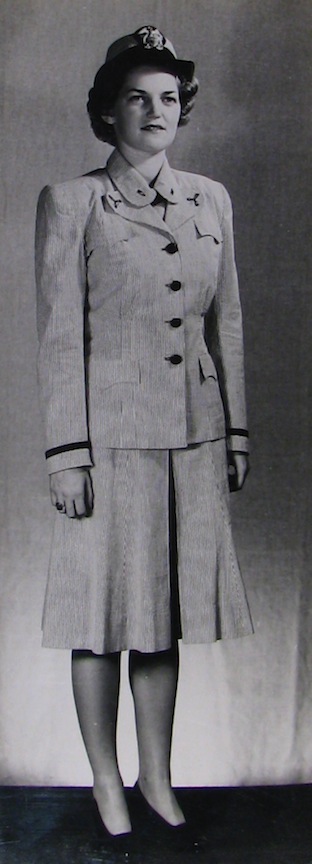

Broughton posed solo as well (left). The only difference between her officer uniform and that of the enlisted women is the officer’s hat, the band on the sleeve of the jacket, and the bar on the collar of her dress.
On yeoman Pearson’s uniform (below), her hat has a removable cover that matches the seesucker of the dress.

The WAVES officer’s hat. The WAVE uniform was designed by the couture designer Main Bocher. The photo comes from the National Archives.

The SPARs had a similar uniform to the WAVES, as shown in the photo above. Both were designed by couture designed Mainbocher. The key difference was in the lapel insignia. While the WAVES had the “fouled anchor” symbol of the Navy, the SPARs had a Coast Guard insignia on their collar.
This National Archives photograph shows World War I Yeomanette Sadie Flay comparing her uniform with World War II era WAVES and SPARs during a recruiting tour in Arizona.
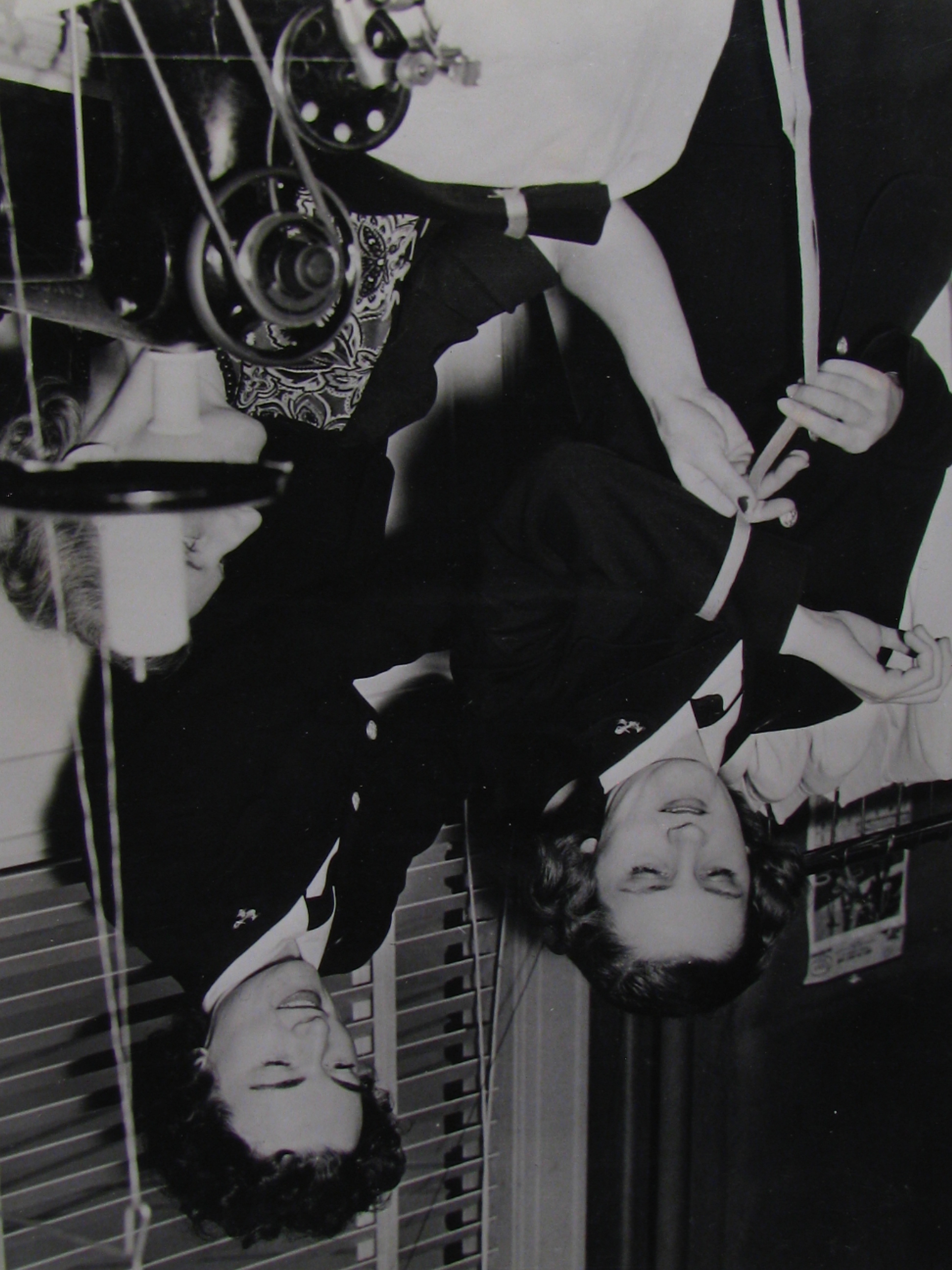
WAVE Annabell Dean gets her first stripe sewn onto her uniform after graduating as an ensign from the Women’s Reserve Officers Training School at Smith College in Northampton, MA. She is being assisted by Ensign Mabel Theobald.
The photograph comes from the National Archives.

WAVES fitters estimated the uniform size for women, and then the WAVES were expected to get their uniforms custom-tailored for a perfect fit. Tailoring was included in the stipend women received to purchase a uniform.
This image comes from Marjorie Sue Green’s booklet From Recruit to Salty WAVE! The Ordeal of Seaman Green held by The Betty H. Carter Women Veterans Historical Project at the University of North Carolina Greensboro.
The WAVES base newspapers also reminded women of what they had left behind. In this comic, a WAVE (dressed in her summer grey seersucker uniform) wistfully remembers the fashions she was able to follow before joining the WAVES.

Before thinking that the comic was criticizing the uniform, remember that the WAVES’ uniform was couture-designed by the famous designer Mainbocher – and that while WAVES did wear a uniform on the outside, they could choose their own nightclothes and undergarments.
So even though they “gave it all up” they did so to become a part of what newspapers and magazines said at the time were “the best dressed women in America.”
This comes from the archives at the University of Northern Iowa.

The instructions on how to tie a proper knot for the WAVES tie were pervasive. This is another image published in a different base newsletter.
It comes from The Betty H. Carter Women Veterans Historical Project at the University of North Carolina Greensboro.
The base newspapers not only gave WAVES information about the uniform of the day: they also gave women guidance about how to assemble the uniform.
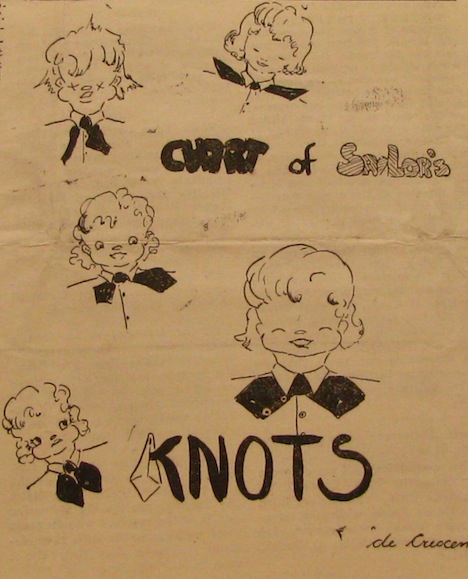
This comic shows newbie WAVES how to tie the “proper” knot for their uniform tie. It was published in the base newsletter for the Cedar Falls training center.
The image comes from the collection of the University of Northern Iowa archives.
WAVES heading to Hawaii would need uniforms fit for a more tropical environment. That meant the seersucker uniforms for work and tropical white uniforms for dress, instead of the every blues most women wore.

Here, WAVES are learning the protocol for wearing the white uniform, which most hadn’t had or needed before heading to Hawaii. It dates from January 8, 1945, just before the women were scheduled to depart.
It comes from the National Archives.
 Hinges of History