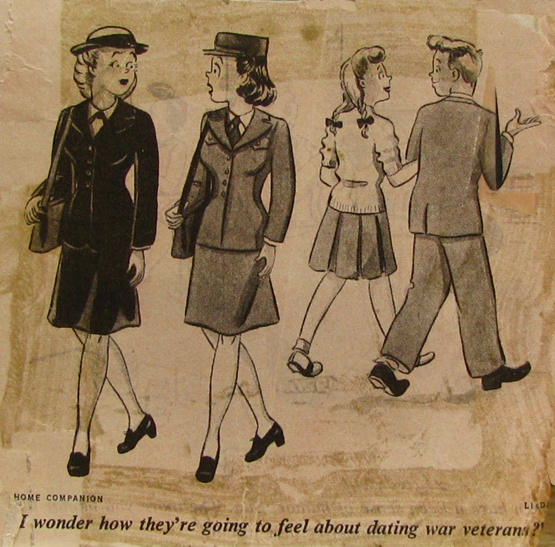
From the start of the WAVES, the women were “in” the Navy, qualifying for all veteran benefits. The same as the men.
This comic comes from the collection of Liane Rose Galvin.
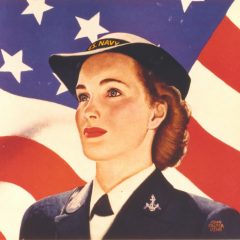
A Blog About Women Who Were Homefront Heroines: the WAVES of World War II
From the start of the WAVES, the women were “in” the Navy, qualifying for all veteran benefits. The same as the men.
This comic comes from the collection of Liane Rose Galvin.

Mary Marovich Ryan, the mother of Homefront Heroines: The WAVES of World War II director Kathleen Ryan, at the Fairmont Hotel in San Francisco with a group of friends. She’s the 2nd from the right.
Happy Mother’s Day to all the moms out there – you’re all homefront heroines!
Women began submarine training in 2011, after the announcement in the previous year that women would be allowed to serve on Ohio class submarines.
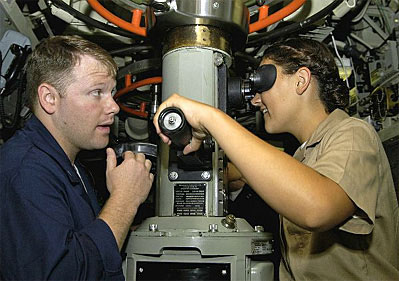
This photograph shows women in training at the U.S. Navy base in Groton, CT. It comes from the U.S. Navy.
Captain Sara Joyner in 2010 became the first woman named to head a Carrier Air Wing. Her appointment was announced at the 23rd annual Women’s Leadership Symposium in Washington.

This photograph comes from the U.S. Navy.
Various women’s firsts would continue over the years. First Hispanic Brigadier General. First African American pilot. First helicopter pilot. First combatant ship commander. In 2010, the Navy appointed Rear Admiral Nora Tyson to be the first female to command a carrier strike group.

This photograph comes from the Naval History and Heritage Command.
Women were allowed to serve aboard ships in 1978, but it wouldn’t be until 1993 that women were allowed on combatant ships.
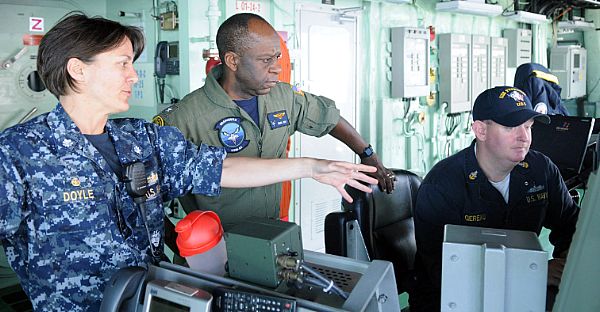
This photograph shows Cmdr. Kris Doyle, commanding officer of the littoral combat ship USS Freedom (LCS 1), explains the readiness control officer console on Freedom’s bridge to Rear Adm. Earl L. Gay. It comes from the U.S. Navy.
1990 offered another first for women in the Navy. Captain Marsha J. Evans was named the commander of Naval Station Treasure Island in San Francisco. She would later become a Rear Admiral in the Navy.
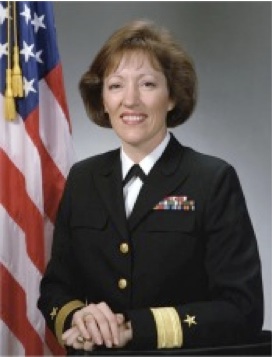
This photograph comes from the Naval History and Heritage Command.
Women served on ships in a variety of duties for more than 10 years before the first woman would be named a ship’s commander. That was Lieutenant Commander Darlene Iskra, who was named the commander of the USS Opportune.

This photograph comes from the Whidbey Crosswind.
The milestones continued in the 1970s. The Navy’s women in ships program began in 1978. It allowed women to serve on a wide variety of auxiliary ships (but not combat ships).
This photograph shows Seaman Recruit Joy Turner in the doorway of a repair ship. In 1978, USS Vulcan became the first U.S. Navy ship other than a hospital ship to have women permanently stationed on board.
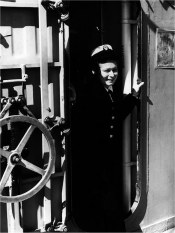
The photograph comes from the Naval History and Heritage Command.
In 1976, President Gerald Ford signed Public Law 94-106 requiring the service academies to admit women by 1976. Women began their training that fall for the class of 1980
Eighty-one women were in that first class and 55 graduated. Elizabeth Belzer was the first woman graduate and Janie L. Mines, the first black female graduate.
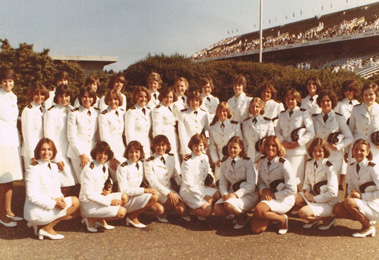
This photograph of the class of 1980 comes from USO On Patrol.
 Hinges of History