Growing Up

Susan Ahn Cuddy was born in Los Angeles, the daughter of Dosan Chang Ho and Helen Ahn, the first married Korean couple to immigrate to the U.S. Her father was an advocate for a free Korea, and left his family in California to return back to Korea to help lobby for its freedom from Japan. He would be imprisoned and die there
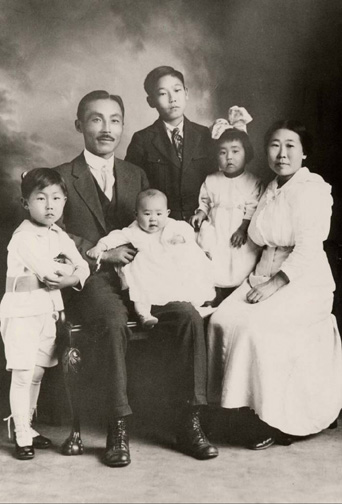
This is a photograph of the Ahn family circa 1917. It comes from the collection of Susan Ahn Cuddy and the Island Mountain Trading Co.
End of the War

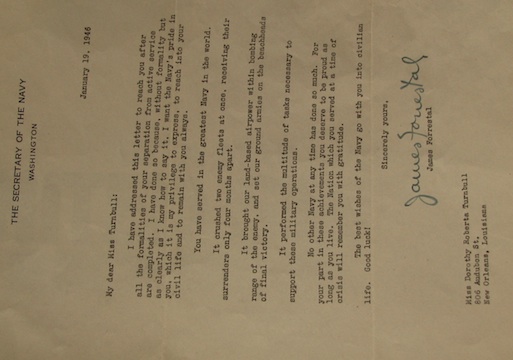
Dorothy Turnbull says the most meaningful thing she got from the Navy was this letter from Secretary of the Navy James Forrestal, which she received after she resigned from the WAVES at the end of the war.

There was no need for me to sell the Navy anymore. I mean to represent it. I felt that they were big now, they could take care of themselves (laughs). That I had nurtured them along?  No, the Navy did more for me than I ever did for it.

After the war, Dorothy returned to college to get an M.A. in counseling. She taught for years, and also counseled veterans.

Shipshape

The reality was that Dorothy Turnbull, and most of the WAVES, spent little or no time about ships. The rumor was that it was unlucky for women to be aboard ships, and Navy policy prohibited women other than the Navy Nurse Corps from serving aboard a ship.

However, the women did do goodwill tours to visit various ships in port, as in this photograph from the Dorothy Turnbull Stewart collection.


“A Little Risqué”

Dorothy Turnbull wasn’t above using sex appeal to sell the WAVES – as long as it was wholesome sex appeal.

You see, well, they were showing the audience that we had that had gotten together. They were were showing how the women in the Navy were still women. And ladies. That was the whole thing was to let society know that our girls were their girls. They were mothers, perhaps — well, not mothers. They were daughters and sisters. This was one method of getting something a little risqué — bathing suits.

This photograph of a WAVES recruitment event in Galveston comes from the collection of Dorothy Turnbull Stewart.

A New Orleans Touch

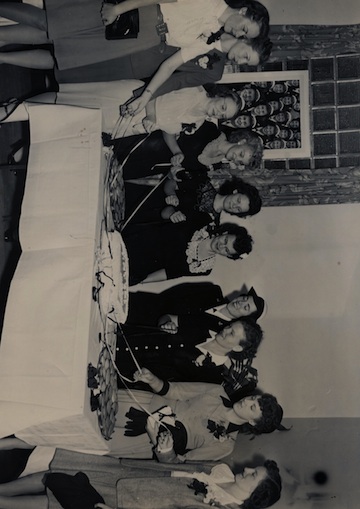
When women got to the recruiting events, Dorothy Turnbull used creative methods to get the women excited about their new jobs in the Navy.

In this photograph, women are pulling charms from a Mardi Gras-style “King Cake.” The charms are of the various jobs the women could hold in the Navy, from yeoman to pharmacist’s mate, gunnery instructor to aerographer and everything in between.

It comes from the collection of Dorothy Turnbull Stewart.

The YWCA Brochure

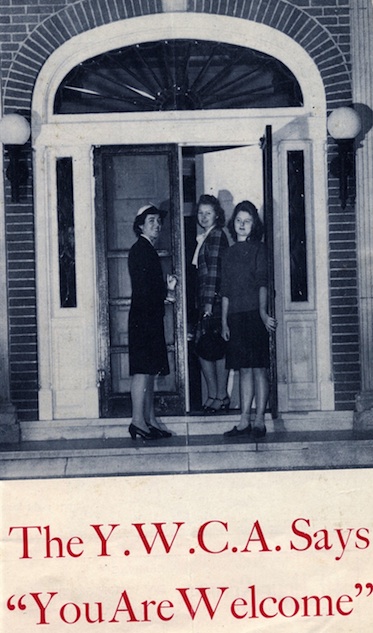
Dorothy Turnbull worked several cities in Southern Texas, including Beaumont, where she coordinated with the local YWCA to host events for recruits.

These ar two of my recruits.  Women who came in to be tested, see, they’d come from these little towns down to Beaumont. They’d come from Port Arthur, Orange. We’d arrange for them to take the tests with me there.  Bring the doctors over, or they’d come over to Houston to take the physical.  They’d do everything before the physical in Beaumont area. Then in Houston, they’d come over and if they passed the physical they could be sworn in right then.

This brochure comes from the collection of Dorothy Turnbull Stewart.

Meeting Eleanor Roosevelt

Dorothy Turnbull joined the WAVES in 1943. She headed to boot camp at Hunter College and was selected to become a recruiter. Because of her connections in New Orleans, they wanted her to be stationed there. But when she finished boot camp there weren’t any openings, so she spent another eight weeks at Hunter making sure the new boots didn’t get into trouble as part of the Shore Patrol. She also helped out with visiting dignitaries.

Eleanor Roosevelt came to visit us when I was on Shore Patrol. Well, ship service is what they called us.  And here she is getting out and I think I might have been one of these.  My claim to fame is when she was going into the building from getting out here and going down here, I held the door for her (laughs).  With my backside as I’m (laughs).  That was my claim to fame.

This photograph comes from the collection of Dorothy Turnbull Stewart.

To New York

It was in 1943 when Dorothy Turnbull headed to boot camp at Hunter College. While she was there, they tried to discover what she could do in the Navy.

They interviewed you and tested you and did all of this with us.  And marched around, and I enjoyed that. So as I would be interviewed, I realized I couldn’t say I wanted, I was – I was good in numbers, but I sure didn’t want to go to bookkeeping or storekeeping, or whatever they called it.  I couldn’t imagine myself as selling anything or that storekeeping, you see (laughs). That’s what I thought it was.  All I could do was talk and tell them about things I believed in.  So they decided that that’s all I could do, and that’s what a recruiter does.

This photograph of Dorothy’s boot class comes from the collection of Dorothy Turnbull Stewart.

A Mother’s Illness

Dorothy Turnbull attended high school in New Orleans. She was a member of a high school sorority, and then after she graduated she went to Newcomb College in New Orleans and joined a sorority there.

It was when she was in her first year of college at Newcomb, that it was announced that the United States had been attacked at Pearl Harbor. Around the same time her mother was diagnosed with cancer.

We did have rationing.  All this stuff is going on. My mother, of course, wasn’t a house keeper at the time.  She was really bed ridden.  So we had help. (Then) my father decided it might be a good idea to bring her down to Miami. A change of climate and everything.

Dorothy stayed behind in New Orleans for a year or so, and then moved to Miami to be with her father and mother.

This photograph of Dorothy’s mother comes from the Dorothy Turnbull Stewart collection.

Growing Up

Dorothy Turnbull was born on July 24, 1922 and grew up in New Orleans.

 My father was born in Algiers, which is across the river from New Orleans. I think people today know something about the area from Katrina. Algiers suffered, but not as much as the city proper. But long time ago he was from there.  I always used to tell people though, they said, “Oh, my, you have an interesting background!”  (laughs)  Algiers thinking of the foreign land.

She had one older brother who was two years older. Dorothy’s father was a real estate developer, but she doesn’t really remember any hardship as a child.

This photograph comes from the collection of Dorothy Turnbull Stewart.