SPARs Uniform

The SPARs had a similar uniform to the WAVES, as shown in the photo above. Both were designed by couture designed Mainbocher. The key difference was in the lapel insignia. While the WAVES had the “fouled anchor” symbol of the Navy, the SPARs had a Coast Guard insignia on their collar.

This National Archives photograph shows World War I Yeomanette Sadie Flay comparing her uniform with World War II era WAVES and SPARs during a recruiting tour in Arizona.

Same Rank and Pay

Like the WAVES, the Coast Guard SPARs would have the same rank and pay as their male counterparts. And like Coast Guard men, the SPARs fell under Navy jurisdiction during World War II. Military protocol demanded that the Coast Guard be commanded by the Navy during wartime.

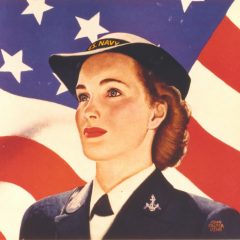
This recruitment poster comes from the National Museum of the U.S. Navy.

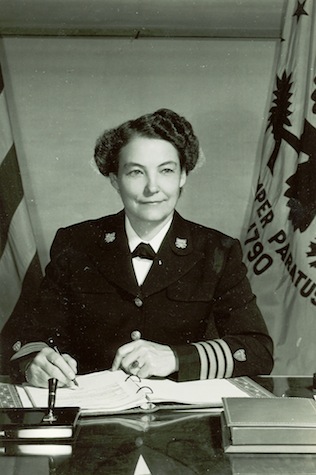
Dorothy Stratton

Coast Guard SPARs leader Dorothy Stratton moved from the WAVES when the Coast Guard SPARs were founded on November 24, 1942. She became the first SPAR. She is credited with giving the SPARs their name: writing in a member to Coast Guard Commandant Vice Admiral Russell Waesche:

The initials of [the Coast Guard motto Semper Paratus, Always Ready] are, of course SPAR. Why not clal the members of the Women’s Reserve SPARs? . . .As I understand it, a spar is. . .a supporting beam and that is what we hope each member of the Women’s Reserve will be.”

This photo comes from the U.S. Coast Guard.

Happy Anniversary SPARS!

Because of the holiday weekend, we held off on this post until today. But it was 70 years ago, November 23, 1942, that the Coast Guard SPARS was founded. The SPARS were the Coast Guard’s women’s reserve and their name came from the Coast Guard motto Semper Paratus, Always Ready.

This recruitment poster comes from the National Museum of the U.S. Navy at the Navy Yard in Washington, DC.

Meeting the Dancer

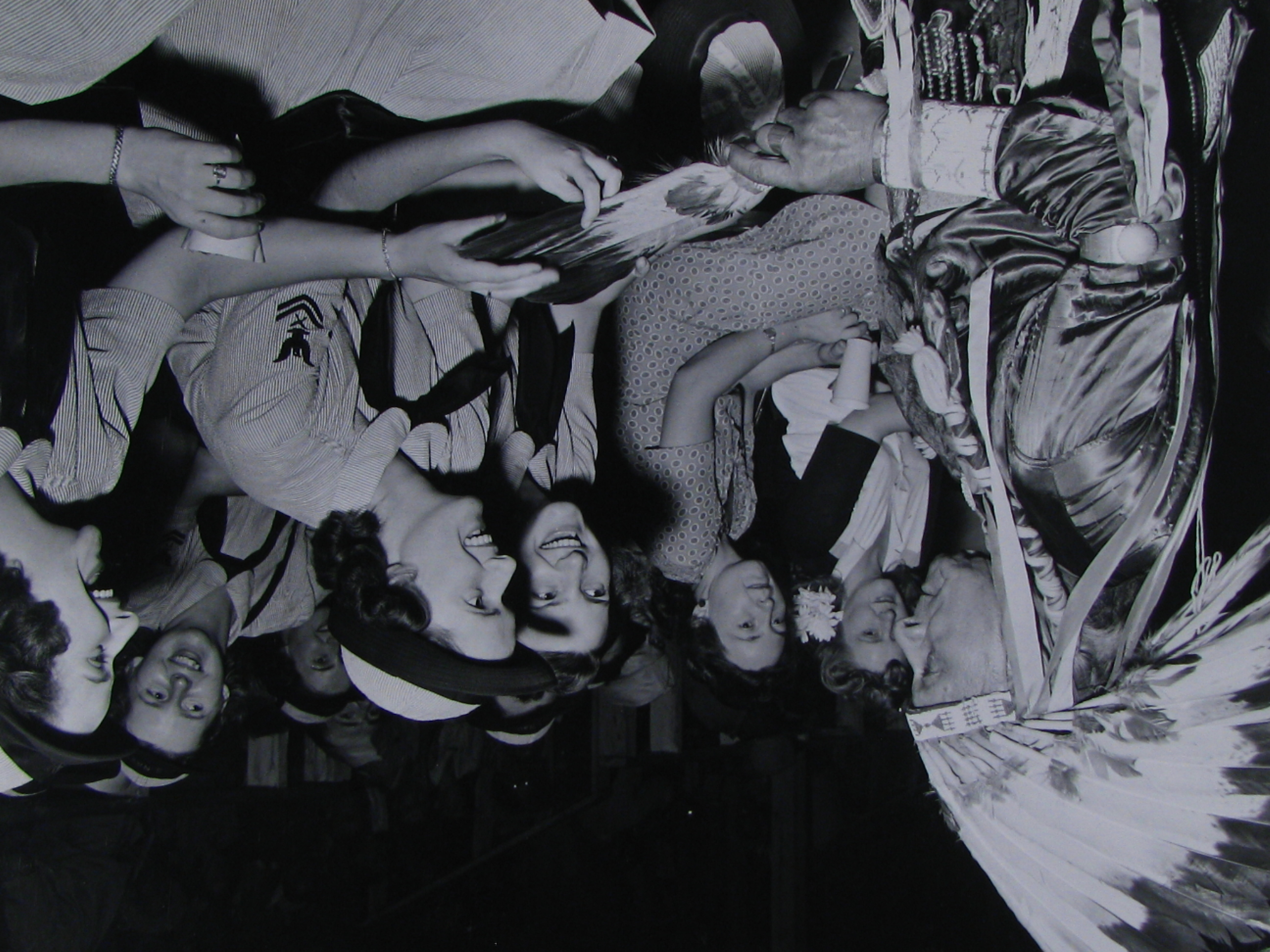
This National Archives photograph was taken at the American-Indian Exposition at Anadarko, Oklahoma, 1944. The caption reads:

WAVES from NAS, Norman, Oklahoma, were fascinated by the trapping of this real old Indian dancer. His eagle feature fan was minutely examined and appraised. Although he couldn’t speak a word of English, the translator supplied his name. It’s George Washington Daunkia and the WAVES are, left to right: front row, Virginia Low, Yeoman 2nd Class, Rita Eichalbargar, Yeoman 2nd Class, and Betsye Stratton, Yeoman 3rd Class, around from the second row is Ann Skrip, Storekeeper 2nd Class.

Native American WAVES

This National Archives photograph was taken at the American-Indian Exposition at Anadarko, Oklahoma, 1944. The caption reads:

There is nothing like comparing costumes. Two full-blooded Indian girls meet for a pow-wow and the main interest was not the beautiful trappings of the Native Indian costume but in the WAVES uniform. The WAVE is Delores Beaver, Specialist 2nd Class, who is stationed at NAS, Norman, Oklahoma. The Indian girl examining her tie is Sally Rice who was one of the featured dances in the exposition pageant.

Happy Thanksgiving!

This National Archive photograph comes from a photo shoot at the American-Indian Exposition at Anadarko, Oklahoma.

The caption reads:

It was a great day for two proud American parents when their WAVE daughters came in time to celebrate with them the American-Indian Exposition. It is the Beaver family, all full-blooded Delaware-Shawnee Indians. The photographer caught them all together against this background on the Exposition Pageant grounds. They are (l-r) Margaret, their mother; Delores, Specialist 2nd Class; Jones, their father; and Beulah, Specialist 2nd Class; their little brother Roger is sporting a new hat and an all-day sucker. The WAVES are being congratulated by one of the champion dancers of the pageant, Jack Hokesh, Kiowa.

Happy Thanksgiving, from the Homefront Heroines crew!