Happy Birthday, WAVES

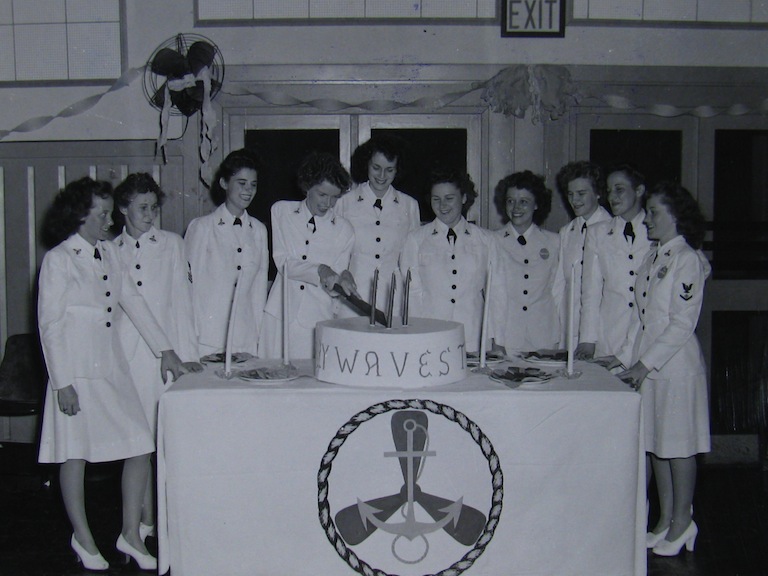
It was 70 years ago today, July 30, 1942, that the WAVES became a division of the U.S. Navy.  This photo shows WAVES at the Naval Hospital, Camp Le Jeune in North Carolina, cutting the WAVES birthday cake on the third anniversary in 1945.

From left to right: Monica Moran, Angela Donahue, Dorothy Neuner, Rebecca Daniel, Muriel Foss, Florence Cutler, Dorothy Davison, Catherine Schuelke, Christine Berron and Catherine Rodgers.

The photo come from the National Archives.

A Company of Two

Only two Navy WAVES were qualified to wear victory medal of World War I.  Joy Bright Hancock (left) and Eunice Whyte (right) both served as Yeomanettes during World War I. About 25,000 Yeomanettes (from Yeomen-F, or Yeoman-Female) were part of the regular Navy because of loophole – the military act at the time didn’t specify that only men could serve. The loophole was closed after the war, and women wouldn’t become an official part of the Navy, other than nurses, until 1942.

This image come from the National Archives.
 

Tough Training

The Navy is known for its tough training programs – and the Navy SEALs are among the toughest. This year’s U.S. Olympic sailing team received part of its pre-Olympics preps from the SEALs.

As the opening ceremonies begin tonight, think about those Navy trained Olympians.

This image is of World War II-era WAVES training in boot camp at Hunter College in the Bronx. It comes from Radcliffe’s Schlesinger Library.

Hinges of History

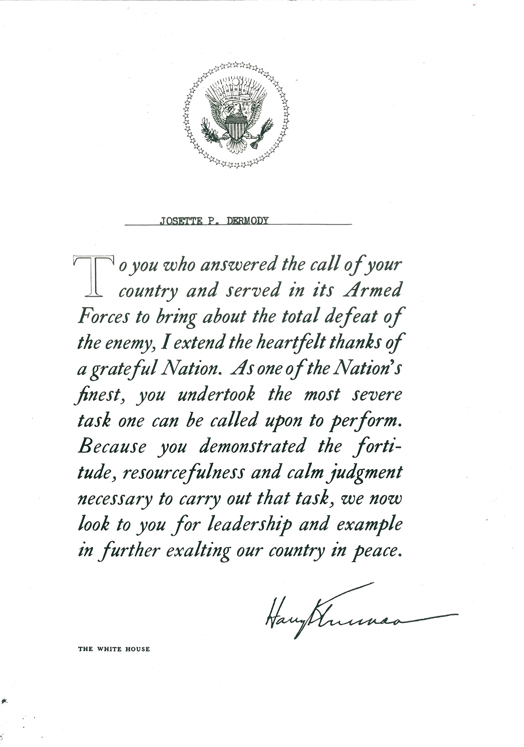
WAVES received this notice from President Harry Truman at the end of their military service.

I think the WAVES are kind of the hinges of history. They were there when the world changed.  And they didn’t cause it particularly bu t it wouldn’t have happened in the same way if the women hadn’t have been there. The Navy was such a different world. Men and women learned to get along with each other in different ways.  (laughs) As I say, we were the hinge. We grew up in this old world watching our mothers and our fathers and then our marriages were completely different.

– Josette Dermony, World War II Navy WAVE.

This comes from the collection of Josette Dermody Wingo.

Protecting Each Other

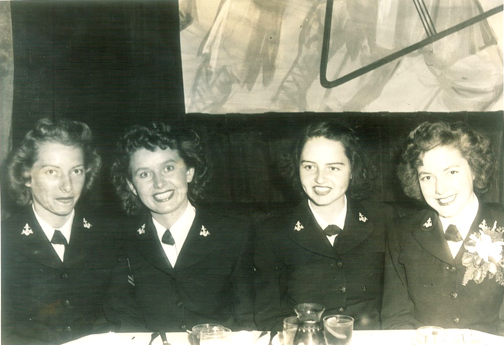
Josette Dermody (second from right in this photo) remembers the gruff-with-a-heart-of-gold Chief who commanded her group of WAVES and sailors.

He was a great big guy, regal guy. He probably would have been retired but he came back for the war. He was wonderful to us.  He had one rule: the sailors shouldn’t use bad language around ladies. So we had this thing because the sailors would swear. The chief would say, “No bad language!  We’re going to take your names!”  We had devised a face for “the man,” you know? And we’d put on our innocent faces and we’d say, “Bad language? Bad language? Did you hear anything???”  (laughs)  We didn’t want the guys to go on report for something stupid like that.

This photograph comes from the collection of Josette Dermody Wingo.

Chutzpah

We weren’t that different from our brothers. Working class kids mostly, you know. A certain amount of American chutzpah and the cockiness. You could tell the sailors from the Marines. And you could tell – as recruits — and you could tell them from the Army.  Because even though the services sorted people out, the personalities sorted in the way — and the sailors are much larkier. I remember when they brought a whole bunch of refugees from somewhere and they had this great big banner up.  Not “mission accomplished” it said, “If we had known you were coming, we’d have baked a cake” (laughs).  I mean, that’s one of the things I love about the Navy.

-Josette Dermody, World War II WAVE

This photograph shows Josette Dermody (at far left) in the wedding party for a fellow WAVE to a sailor. It comes from the collection of Josette Dermody Wingo.

12th Naval District

The Navy divided up the country into various Naval Districts, or administrative hubs. Josette Dermody was stationed in the 12th Naval District, which was headquartered in San Francisco and included Colorado; Utah; Nevada except Clark County); northern part of California (basically north of tSan Luis Obispo, Kings, Tulare, and Inyo counties).

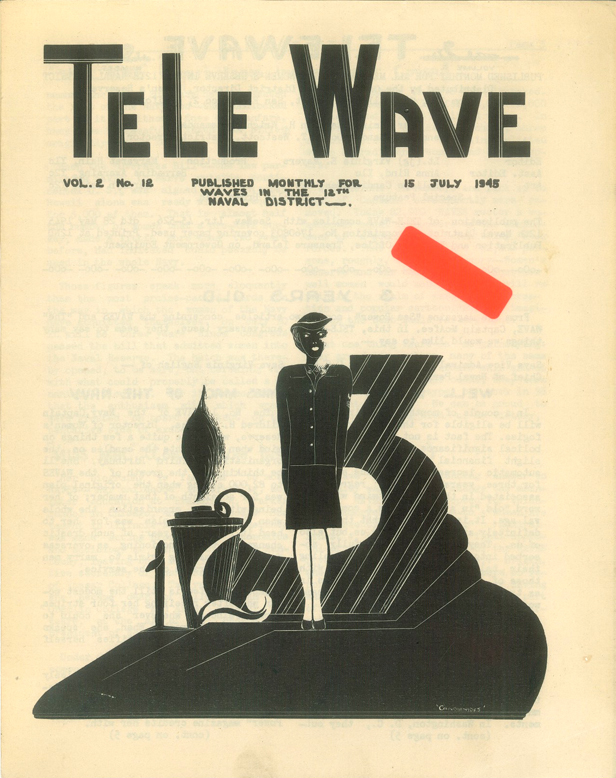
This is a copy of the WAVES newsletter for the District 12. The cover is especially striking – an art deco-style image incorporating a WAVE and what appears to be a stylized ship. It comes from the collection of Josette Dermody Wingo.

Greeting Cards

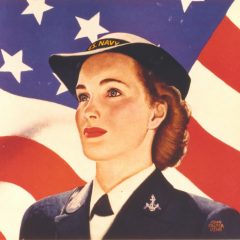
The illustrations of WAVES spilled over into greeting cards, which were made for a variety of occasions, including just to say “hello.” But there were also cards to congratulate a woman on her enlistment, to bid a farewell when she was heading to boot camp, to celebrate a birthday or a holiday, etc.

What’s interesting is how many of the cards portray the WAVES. Rather than the young women seen in other illustrations, greeting cards inevitably show the WAVE as a child, with pudgy legs and cheeks and few womanly curves in her figure.

This card comes from the collection of Liane Rose Galvin.

In Formation

Lots of Navy photographs show the WAVES marching or standing in formation. And many of the women we’ve talked with shared these pictures, telling us that they were there.

The trick, as Marjorie Sue Green so humorously illustrates in this image from her booklet From Recruit to Salty WAVE! The Ordeal of Seaman Green, is to find the individual woman in the sea of WAVES. Some women actually circled themselves. For others, we weren’t so lucky.

Green’s book is held by The Betty H. Carter Women Veterans Historical Project at the University of North Carolina Greensboro.