A Company of Two

Only two Navy WAVES were qualified to wear victory medal of World War I.  Joy Bright Hancock (left) and Eunice Whyte (right) both served as Yeomanettes during World War I. About 25,000 Yeomanettes (from Yeomen-F, or Yeoman-Female) were part of the regular Navy because of loophole – the military act at the time didn’t specify that only men could serve. The loophole was closed after the war, and women wouldn’t become an official part of the Navy, other than nurses, until 1942.

This image come from the National Archives.
 

Navy Olympians

No female Naval Academy grads have ever made it to the U.S. Olympic Team, but dozens of men have, including gold medalists Carl Osborn (Rifle, 1920), Raymond Bass (Gymnastics, 1932), and David Robinson (Basketball, 1992). The 8-oared rowing teams, made up entirely of Navy men, also took home gold in 1920 and 1952.

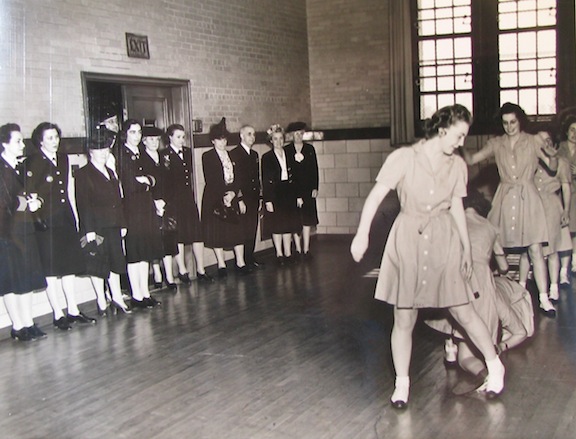
It’s not clear if any WAVES were Olympians either before or after their service, but Wimbledon and U.S. Open tennis champ Helen Hull Jacobs was a WAVE commander in Naval intelligence during the war (tennis wasn’t an Olympic sport during the years she competed). And WAVE certainly were in shape via their exercise programs, as indicated by this photo, which comes from Radcliffe’s Schlesinger Library.

Enjoy the games!

Tough Training

The Navy is known for its tough training programs – and the Navy SEALs are among the toughest. This year’s U.S. Olympic sailing team received part of its pre-Olympics preps from the SEALs.

As the opening ceremonies begin tonight, think about those Navy trained Olympians.

This image is of World War II-era WAVES training in boot camp at Hunter College in the Bronx. It comes from Radcliffe’s Schlesinger Library.

Olympic Feat

Did you know that three Navy women, the Naval Academy’s Laura Gorinski, Toni Paruso, and Rheanna Vaughn, qualified to swim in the recent U.S. Olympic trials? While they didn’t make the Olympic swim team, they deserve a salute as we head to the opening ceremony of the Olympics this week.

This photo shows WAVES celebrating the 2nd anniversary of the WAVES with a spash in the pool. It comes from the National Archives.

Hinges of History

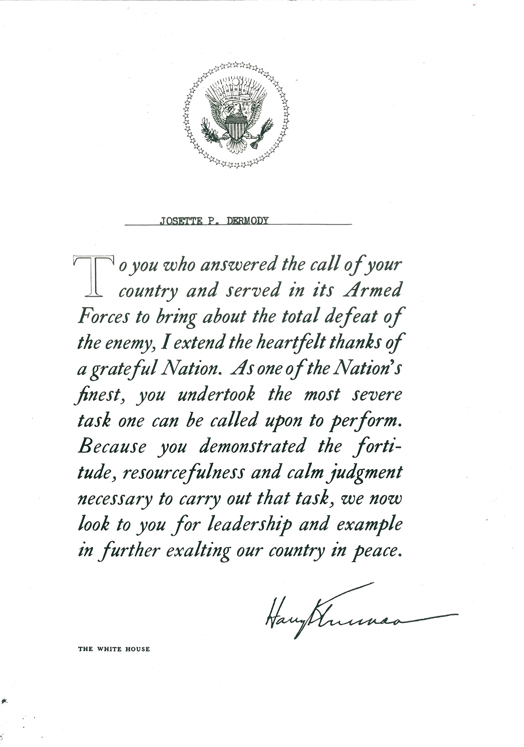
WAVES received this notice from President Harry Truman at the end of their military service.

I think the WAVES are kind of the hinges of history. They were there when the world changed.  And they didn’t cause it particularly bu t it wouldn’t have happened in the same way if the women hadn’t have been there. The Navy was such a different world. Men and women learned to get along with each other in different ways.  (laughs) As I say, we were the hinge. We grew up in this old world watching our mothers and our fathers and then our marriages were completely different.

– Josette Dermony, World War II Navy WAVE.

This comes from the collection of Josette Dermody Wingo.

Blackie

Of course, where there are young men and young women during wartime, there is a chance for romance and adventure. And for the oh-so-innocent Josette Dermody, romance and adventure came in a dashing package known as Blackie.

Blackie was my epitome of being a sailor. He loved his ship. He loved being a sailor and in a sense he loved me. But, I found out that one day he was dating me, but he would drop me off and go find the other kind of woman for the evening and stuff. He was scary but he was exciting.

This photo comes from the collection of Josette Dermody Wingo.

Protecting Each Other

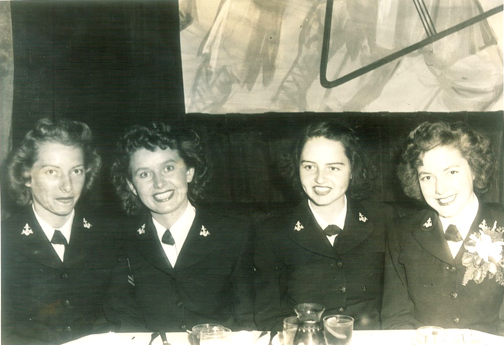
Josette Dermody (second from right in this photo) remembers the gruff-with-a-heart-of-gold Chief who commanded her group of WAVES and sailors.

He was a great big guy, regal guy. He probably would have been retired but he came back for the war. He was wonderful to us.  He had one rule: the sailors shouldn’t use bad language around ladies. So we had this thing because the sailors would swear. The chief would say, “No bad language!  We’re going to take your names!”  We had devised a face for “the man,” you know? And we’d put on our innocent faces and we’d say, “Bad language? Bad language? Did you hear anything???”  (laughs)  We didn’t want the guys to go on report for something stupid like that.

This photograph comes from the collection of Josette Dermody Wingo.

Chutzpah

We weren’t that different from our brothers. Working class kids mostly, you know. A certain amount of American chutzpah and the cockiness. You could tell the sailors from the Marines. And you could tell – as recruits — and you could tell them from the Army.  Because even though the services sorted people out, the personalities sorted in the way — and the sailors are much larkier. I remember when they brought a whole bunch of refugees from somewhere and they had this great big banner up.  Not “mission accomplished” it said, “If we had known you were coming, we’d have baked a cake” (laughs).  I mean, that’s one of the things I love about the Navy.

-Josette Dermody, World War II WAVE

This photograph shows Josette Dermody (at far left) in the wedding party for a fellow WAVE to a sailor. It comes from the collection of Josette Dermody Wingo.

A Close Group

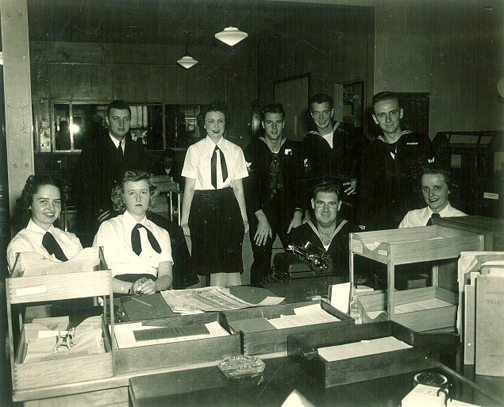
Josette Dermody (at far left in this photo), worked as a gunner’s mate at Treasure Island in San Francisco, training men to shoot at moving targets. It was a small, close-knit group who worked and played together.

 Mostly we stuck together because, you know — let me see, there were probably 30 of us. And depending upon your duty hours and that sort of stuff — then since our work was with the guys, it wasn’t with the gals as much — although it wasn’t exclusive particularly.  It was just the way the work went.

This photograph comes from the collection of Josette Dermody Wingo.