Volunteering to Remain in Service

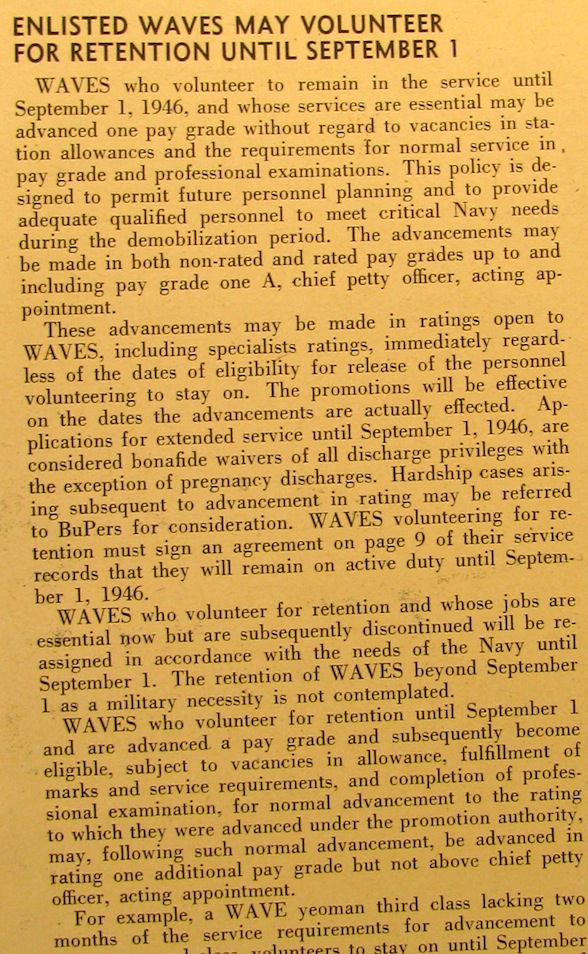
As the Navy was releasing women from service, it realized that it needed some women who qualified for discharge to remain in the Navy. So it created temporary volunteer assignments which would extend the women’s service beyond the initial “duration of the war plus six months” promised by Navy recruitment materials earlier in the war.

This clipping comes from The Arthur and Elizabeth Schlesinger Library on the History of Women in America at the Radcliffe Institute for Advanced Study, Harvard University.
Point System

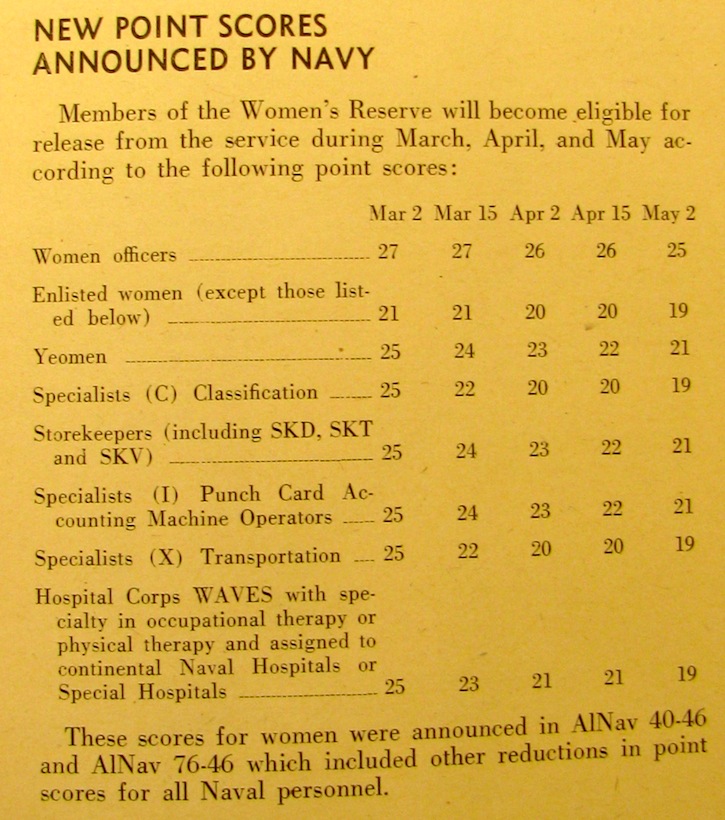
This clipping from a WAVES newsletter shows the point system the Navy was following to release women from the WAVES. Note that women officers and selected enlisted positions such as yeomen, storekeepers and the hospital corps had a higher point total they would need to gather to qualify for separation than other enlisted women.

It comes from The Arthur and Elizabeth Schlesinger Library on the History of Women in America at the Radcliffe Institute for Advanced Study, Harvard University.
Discharge Emblem

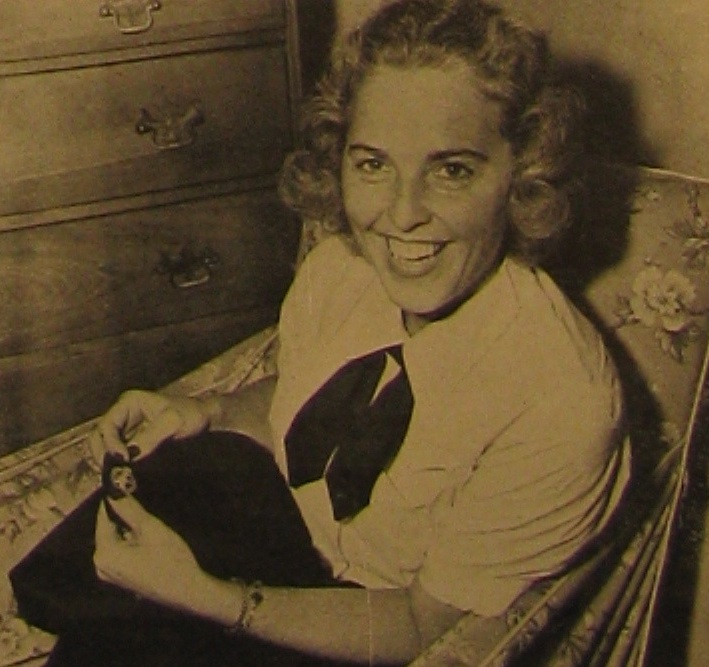
The final step for the WAVE leaving the service? Sewing a discharge emblem on the uniform. Here, former WAVE Recruiter Helen Kiley does the job with a smile.

It comes from The Arthur and Elizabeth Schlesinger Library on the History of Women in America at the Radcliffe Institute for Advanced Study, Harvard University.

To the Civilian World

As WAVES went through separation from the Navy at war’s end, one thing they would learn is how to readjust to civilian life. Here, a “trained interviewer” provides former WAVE Recruiter Helen Kiley with that crucial information at a separation unit in New York City.

It comes from The Arthur and Elizabeth Schlesinger Library on the History of Women in America at the Radcliffe Institute for Advanced Study, Harvard University.

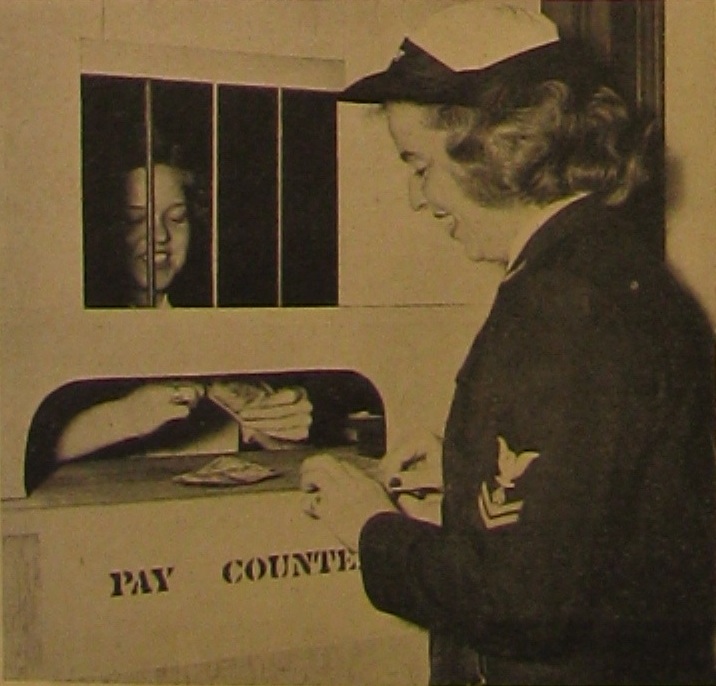
Medical Check-Up

As WAVES were leaving the service, one of the first things they would get was a medical check-up to make sure they were still in tip-top shape. Here, a pharmacist’s mate assists WAVE Helen Kiley in the final medical exam at the separation unit in New York City.

It comes from The Arthur and Elizabeth Schlesinger Library on the History of Women in America at the Radcliffe Institute for Advanced Study, Harvard University.
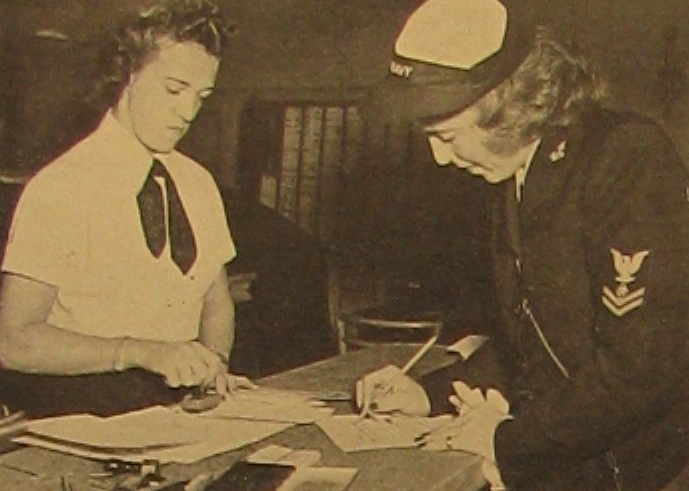
Separation Units

The Navy’s newsletter for WAVES showed what they could expect as they moved through the separation units. This photograph shows WAVE Helen M. Kiley, recruiter, going through the process at a  separation center in New York City. It comes from The Arthur and Elizabeth Schlesinger Library on the History of Women in America at the Radcliffe Institute for Advanced Study, Harvard University.
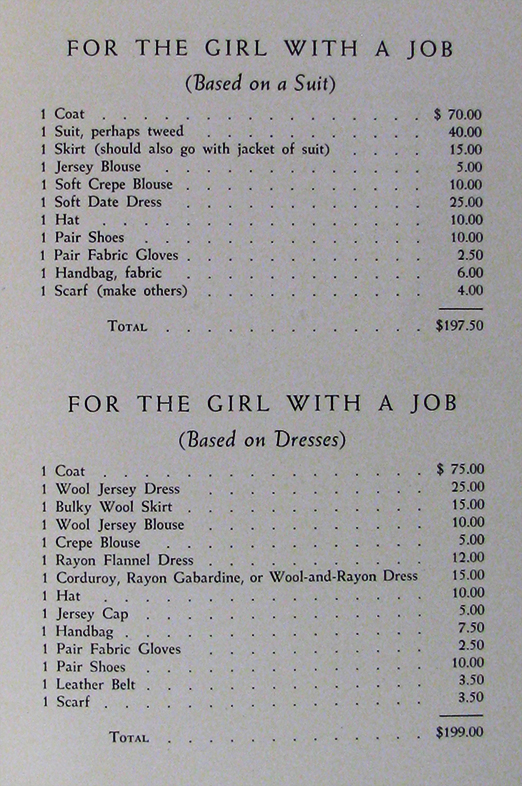
“Your ‘Separates'”

The Navy booklet women received upon leaving the service offers suggestions for dressing in skirts and tops, suggesting soft blouses or turtlenecks for the top half of the body, and the following for the bottom:

The skirt – a heavy woolen, gathered, dirndl-fashion, into a belt. May be tweed, plain, check, stripe.

The skirt is the smooth wool jersey with high turtle neck.

An important wide belt gives a put-together look to these newest of the “separates.”

From the booklet “Back to Civvies,”  held by the The Betty H. Carter Women Veterans Historical Project at the University of North Carolina Greensboro.

“What About Your Uniform?”

Remove the insignia and sex on plain blue buttons.

Don’t cut it, decorate it, remodel it, or otherwise change it. It was designed by a fine designer. If you are tired of it, hang it up in the closet after you have changed the buttons. Don’t look at it again until next season. Then treat it as your smart tailored suit, and do any of these things with it:

  • Wear a gay hat and a bright checked or striped scarf.
  • Wear a bright green or lemon yellow blouse, or a shocking pink or frilly white dickey. Add the most feminine of hats.
  • With your white uniform, wear your Navy blue shirt and a blue hat. Or a black blouse and black accessories. Or wear deep, bright colors with it.
  • Wear luggage tan accessories with either uniform, and remember that they are both perfect neutrals, and foils for any other color harmonies that you want to use.

From the booklet “Back to Civvies,”  held by the The Betty H. Carter Women Veterans Historical Project at the University of North Carolina Greensboro.