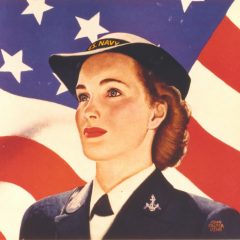
Forms and More Forms

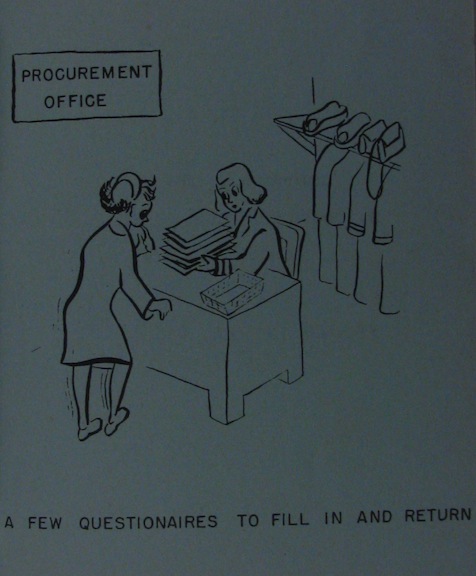
Marjorie Sue Green’s booklet From Recruit to Salty WAVE! The Ordeal of Seaman Green showed the before and after in the transition from civilian to WAVE. This image appeared on the page immediately following the image in yesterday’s post, demonstrating the Navy’s addiction to paperwork.

It comes from The Betty H. Carter Women Veterans Historical Project at the University of North Carolina Greensboro.
From Recruit to Salty Wave

Many WAVES wrote short books about their experiences, designed to make the transition from civilian to WAVE easier for other recruits.

Marjorie Sue Green’s booklet From Recruit to Salty WAVE! The Ordeal of Seaman Green is an example of one of those books. It’s a highly-illustrated account of Green’s transformation from civilian to military.

This is one of the first images in the book, showing the experience at the recruitment office.

It comes from The Betty H. Carter Women Veterans Historical Project at the University of North Carolina Greensboro.

Past Lives

The WAVES base newspapers also reminded women of what they had left behind. In this comic, a WAVE (dressed in her summer grey seersucker uniform) wistfully remembers the fashions she was able to follow before joining the WAVES.

Before thinking that the comic was criticizing the uniform, remember that the WAVES’ uniform was couture-designed by the famous designer Mainbocher – and that while WAVES did wear a uniform on the outside, they could choose their own nightclothes and undergarments.

So even though they “gave it all up” they did so to become a part of what newspapers and magazines said at the time were “the best dressed women in America.”

This comes from the archives at the University of Northern Iowa.

That Tie

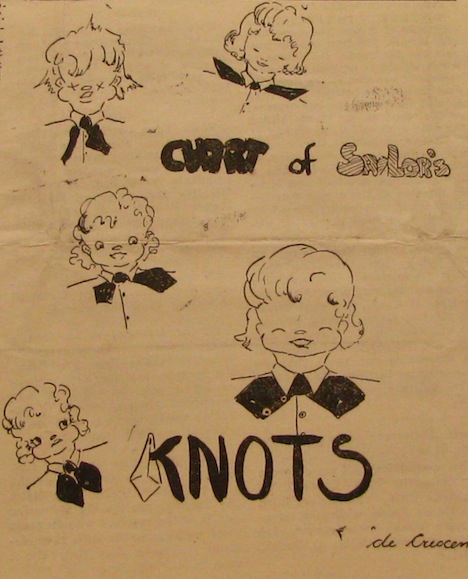
The base newspapers not only gave WAVES information about the uniform of the day: they also gave women guidance about how to assemble the uniform.

This comic shows newbie WAVES how to tie the “proper” knot for their uniform tie. It was published in the base newsletter for the Cedar Falls training center.

The image comes from the collection of the University of Northern Iowa archives.

Order of the Day

This image comes from the newsletter at the Cedar Falls training station for WAVES. It shows how the daily base newspaper was used to communicate information with WAVES about things like the uniform of the day – in this case women were assigned to wear their grey striped searsucker dresses (the summer uniform) with raincoats.

The image comes from the archives of the University of Northern Iowa.

Happy Father’s Day

The first Father’s Day was celebrated in 1910 in Spokane, Washington. It was considered a partner to the older holiday Mother’s Day, which began about two years earlier. The celebration spread, but despite some presidential support (Woodrow Wilson in 1913 and Calvin Coolidge in 1924) and the push by a Senator(Margaret Chase Smith in 1957), the idea of a national holiday to celebrate fathers never became an official national observance.

That was until 1966, when President Lyndon Johnson issued the first presidential proclamation recognizing the third Sunday in June as Father’s Day. Six years later, President Richard Nixon made Father’s Day a permanent national holiday.

This 1940s-era Father’s Day card come from the website Vintage Holiday Crafts.

Happy Father’s Day to all dads!

Work Dutites

This odd snipped from a newsletter is another example of the comic-inspired images used by WAVES. The newsletters were generally run off on a mimeograph machine. For those who came of age after the 1970s, the mimeograph was a forerunner of the photocopy machine that used used a stencil for duplication. The stencil/printing ink combo had a very distinctive smell, and it wasn’t photo-friendly. Hence, the drawings.

It comes from the Schlesinger Library at the Radcliffe Institute for Advanced Studies.

Drawings and Such

We’re beginning a series on cartoons and other WAVES drawings for the HH blog.  This image (from an orientation booklet) is typical of the images made during the time. The WAVE looks young and a little overwhelmed or excited by her new experience at WAVE Quarters D (which was in Washington, DC).

It comes from the Schlesinger Library at the Racliffe Institute for Advanced Studies.

Extra Pay

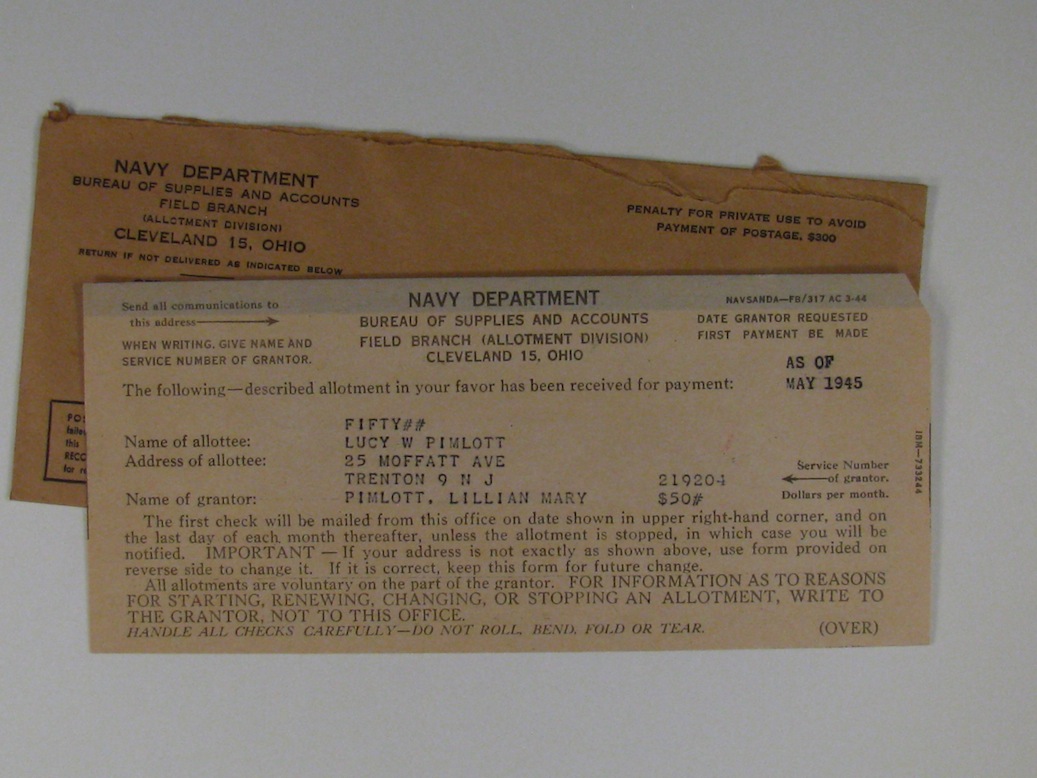
This is a really fascinating document found in the Betty H. Carter Women Veterans Historical Project at the University of North Carolina Greensboro. It is a receipt for extra pay ($50) disbursed to Lucy W. Pimlott, on behalf of WAVES Lillian Pimlott. WAVES received the same pay as men, and like men often received extra money to pay for uniforms and uniform updates. It’s likely this is for a uniform or other supplement, as the $50 amount is much lower than all but one of the Navy pay rates (only an Apprentice Seaman, the lowest rank in the Navy,  made $50 a month).
At this time of this disbursement, WAVE Lillian Pimlott was stationed in Hawaii working in the District Personnel office. She had been in the WAVES since 1943 and would later become a part of the post-World War II Navy.

This disbursement was likely a portion of Pimlott’s monthly base pay, sent home to help support her family.