The First Navy Nurses

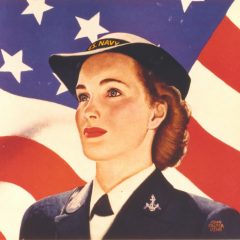
It wasn’t until 1908 that Congress allowed women to serve in the Navy – as nurses. On May 13th of that year, the Navy Nurse Corps was established.

Women had to have at least two years formal training as “graduate nurses” and also have relevant clinical experience to qualify.
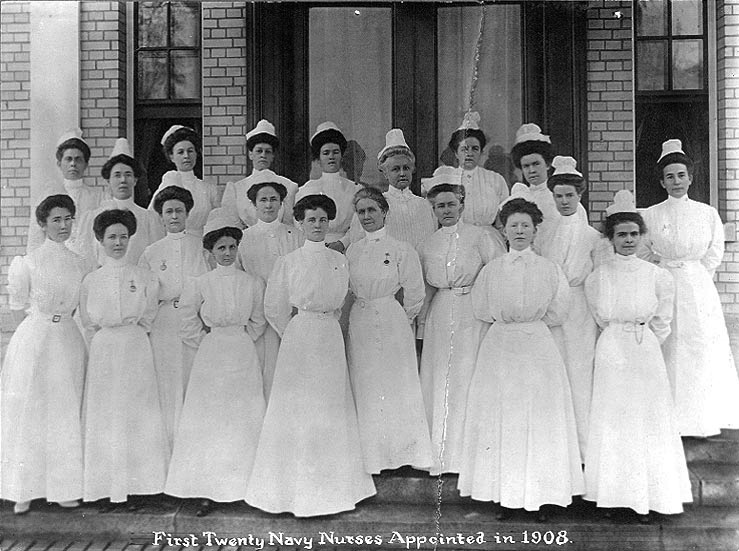
Nineteen women were part of the first nurse contingent,. A 20th, Esther Vorhees Hasson, was a former Army nurse who was tapped to lead the women in the Navy Nurse Corps.

This photograph of the “sacred 20” comes from the collection of the Naval History and Heritage Command.
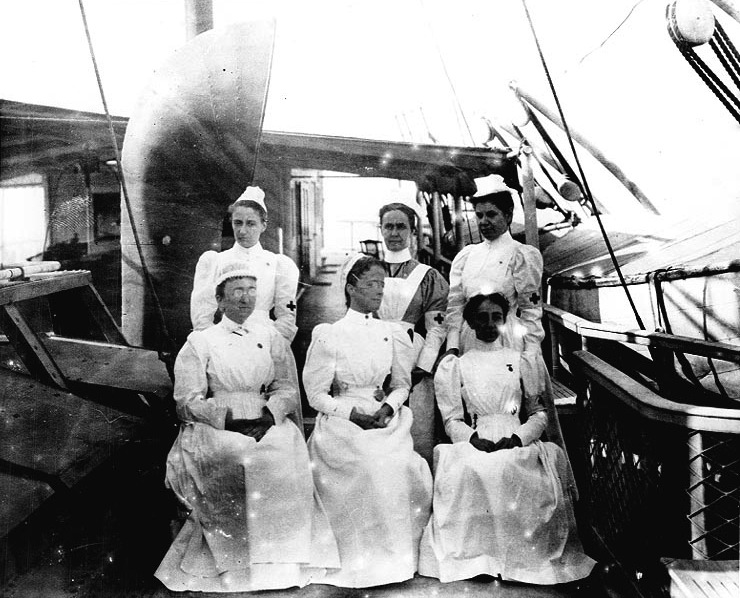
Spanish-American War

The Spanish American War would mark the first time non-religious female contract nurses would be hired by the Navy to serve ashore.The Army, meanwhile, hired women nurses to serve aboard ship on the Relief.

The use of women as nurses during wartime, both the Civil War and Spanish-America War, would lead to the establishment of nursing as a real profession requiring formal training — a profession both open to and dominated by women. It would also lead to the establishment of a formal female nursing corps within the military.

This image is of contract nurses serving in Cuban waters aboard the Army ship Relief. It comes from the collection of the Naval History and Heritage Command.

Albert D. J. Cashier

On August 3, 1862, a nineteen-year-old Irish immigrant named Albert D. J. Cashier, enlisted in the 95th Illinois Infantry. Cashier fought in about forty battles and served until August of 1865.

It wasn’t until 1913 that Cashier, then living in the Quincy, Illinois, Soldiers’ Home, was discovered to actually be a woman. A 1915 deposition from a fellow soldier held by the National Archives found that the deception was extensive, aside from being the shortest person in the company, there was no other indication that Cashier was female.

Cashier died the following year in an insane asylum.

This image comes from the Illinois State Historical Library and the National Archives.

Sarah Edmonds Seelye

Another Civil War cross-dresser was Sarah Edmonds. She assumed the alias of Franklin Thompson and served with the Union Army. She was a nurse and dispatch carrier.

Edmonds ended up deserting her duties. She had contracted malaria and feared she would be revealed as a woman when she was hospitalized. Nonetheless, she ended up receiving a military pension because of her service. Seelye married L.H. Seelye, raised three children, and died in 1898 in Texas.

This image comes from the State Archives of Michigan and the National Archives.

Civil War Battlefields

Like the American Revolution, some women dressed as men in order to serve in the Civil War. Post-war estimates put the number at about 400, but even at the time Mary Livermore with the U.S. Sanitary Commission wrote:

I am convinced that a larger number of women disguised themselves and enlisted in the service, for one cause or other, than was dreamed of. Entrenched in secrecy, and regarded as men, they were sometimes revealed as women, by accident or casualty. Some startling histories of these military women were current in the gossip of army life.

One of those women was Frances Clayton, who dressed as a man and served many months in the Missouri artillery and cavalry units. The image comes from the Trustees of the Boston Public Library and the National Archives.

Mother Angela

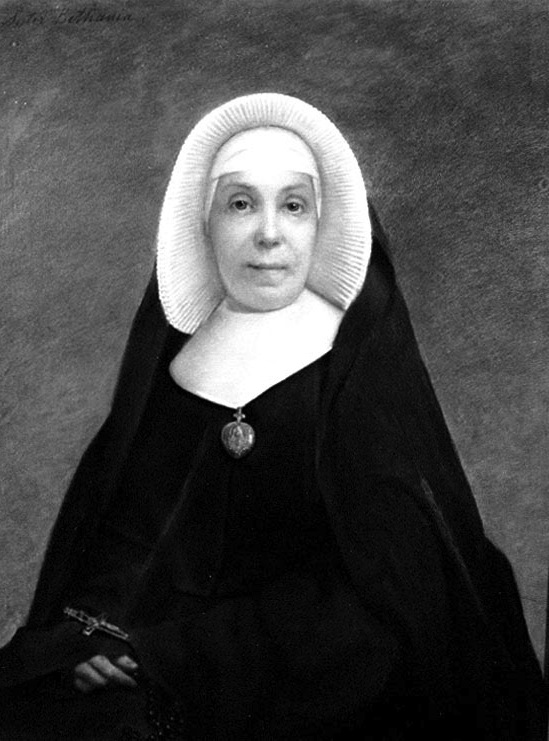
Eighty Sisters of the Holy Cross served the Navy as nurses aboard the USS Red Rover during the Civil War. The Red Rover was a hospital ship based in the Mississippi River.

They were supervised by Mother Angela Gillespie, founder of the Sisters of the Holy Cross.

This engraving of Mother Angela comes from the U.S. Naval History and Heritage Command.

Aboard the Red Rover

During the Civil War, the the USS Red Rover. a hospital ship based in the Mississippi River, became the first Navy vessel to have women on board. The Catholic Sisters of the Holy Cross served as nurses aboard the ship.

This engraving from Harper’s Bazaar shows  a sister nurse attending a patient bedside in one of the wards. It comes from the U.S. Naval History and Heritage Command.
The First Shipboard Women

By the Civil War, the U.S. Navy realized that it would need help from women. And since nursing was an accepted profession for women, the Navy decided that women could serve aboard ships as an experiment.

But not just any women. Nuns. Specifically the Catholic Sisters of the Holy Cross, who served in aboard the pioneer Naval hospital ship the USS Red Rover.  The ship was based in the Mississippi River.

This engraving from Harper’s Bazaar shows at left a sister nurse attending a patient bedside. It comes from the U.S. Naval History and Heritage Command.

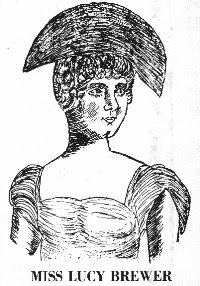
The Mystery of Lucy Brewer

While Deborah Samson is a historically verifiable person, somewhat more mysterious is Lucy Brewer. According to legend, she enlisted in the Marines during the War of 1812, dressed as a man. She was reportedly based onboard the USS Constitution and participated in at least three dramatic sea battles as an expert marksman(woman?).

Brewer later published an autobiographical account of her “experiences.” The Marine Corps regards Brewer’s story as false, because the close living quarters aboard a ship would have made it near impossible to maintain the ruse.

But true or not she does weave a good tale.

This image is from the Marine Corps Web Log.

Who Was First?

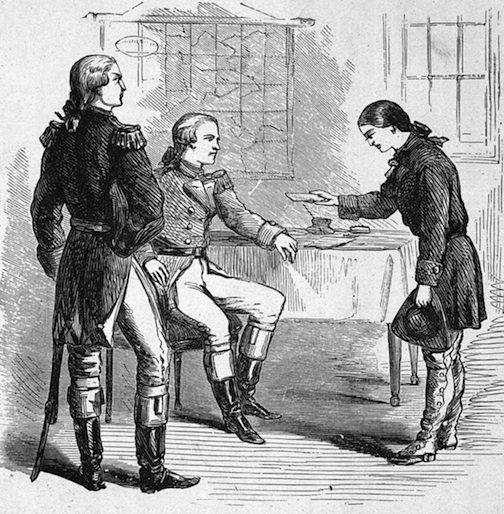
Prior to World War II, women weren’t officially allowed in military services (except for nursing, which we’ll talk about in an upcoming blog). That doesn’t mean they didn’t serve. There are stories of women disguising themselves as men in order to serve as early as the Revolutionary War.

Deborah Samson was one of those women. She dressed up as a young man and volunteered to serve in the American Army in 1778. Samson, now known as Robert Shurtleff (or Shirtliff), served for three years and was wounded twice But she went undetected until she became sick with a fever. After that, she received an honorable discharge and eventually received a military pension.