
Another shot of the airplane that went down in that fatal plane crash, December 13, 1943. Pilot training was often more dangerous, WAVES tell us, than the actual battle combat.
The photo comes from the National Archives.
A Blog About Women Who Were Homefront Heroines: the WAVES of World War II
Another shot of the airplane that went down in that fatal plane crash, December 13, 1943. Pilot training was often more dangerous, WAVES tell us, than the actual battle combat.
The photo comes from the National Archives.
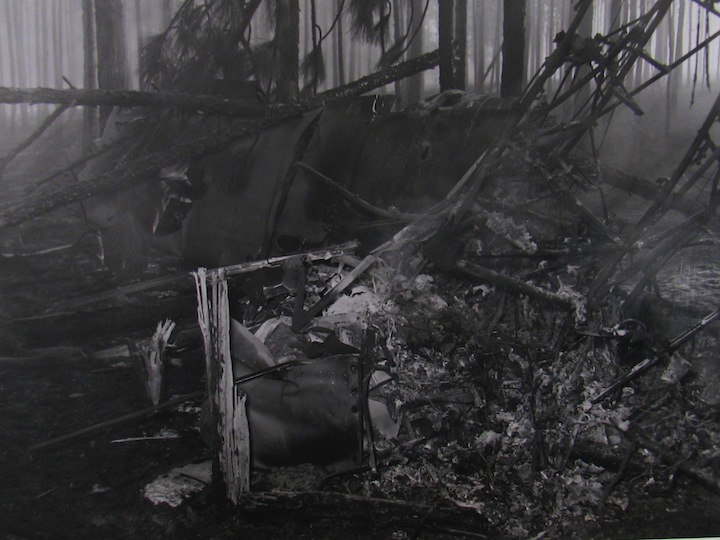
On December 13, 1943, an F SNV-1 (of Squadron 2B based at Saufley Field) crashed in the woods 100 feet north of the north end of Lyons Field, FL. Pilot D.H. Kaufman and his passenger were both killed in the crash.
The photograph comes from the National Archives.
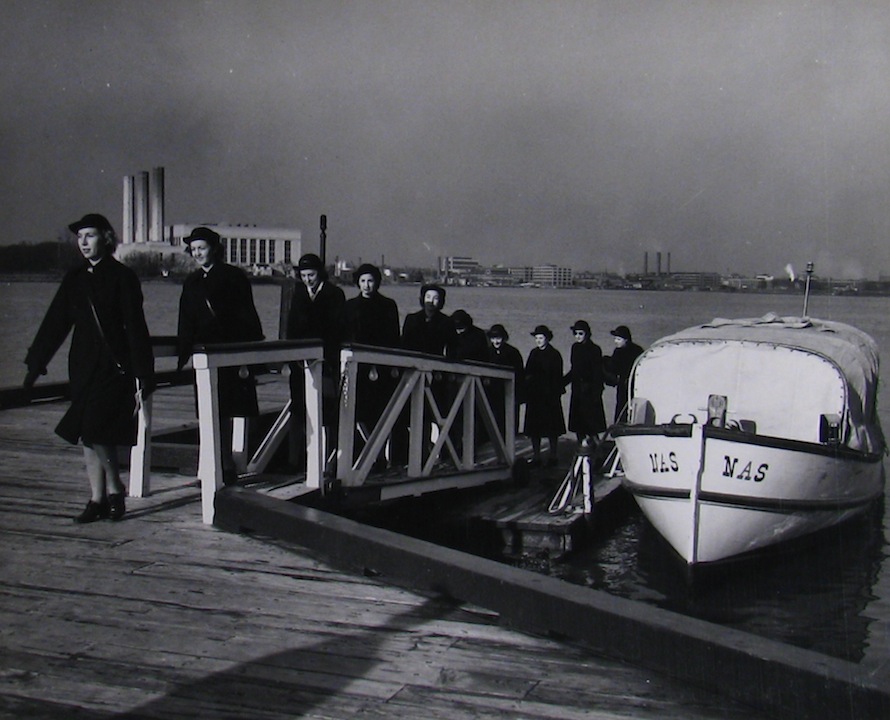
How about this for a daily commute? At Anacostia Naval Air Station in Washington, DC, WAVE rode to and from work across the river in a power driven launch designed for sea duty.
The photograph comes from the National Archives.

A good cartoon makes the rounds at the WAVE recreation room at the naval air station Anacostia, Washington, DC.
The photo comes from the National Archives.

WAVE Commander McAfee, accompanied by Rear Adm. George S. Bryam, inspects the WAVES on duty at the Hydrographic Office, Suitland, MD.
The photograph comes from the National Archives.

San Francisco during World War II was a military town. And while many were bunked at places like Treasure Island, for some WAVES the crush of military personnel meant they lived in the city, off base.
This is an aerial of the WAVES’ barracks at the Western Women’s Club in San Francisco, looking northeast.
The photo comes from the National Archives.

WAVE Genevieve Sullivan speaks on the radio at the WAVES Training School, Hunter College, the Bronx, New York in late 1943.
The photograph comes from the National Archives.
 Finally, from the December 1943 WAVES News Letter, some updates on jobs and rankings for WAVES.
The newsletter comes from the Schlesinger Library at the Radcliffe Institute for Advanced Study.
 From the December 1943 WAVES News Letter. Here, a WAVE at Pensacola Naval Air Station learns how to train men in gunnery skills.
The newsletter comes from the Schlesinger Library at the Radcliffe Institute for Advanced Study.
 Pensacola, Florida hosted a huge Naval presence during World War II, including a Naval Air Training Center (training pilots and gunners). Women not only works to train pilots and gunners, but also kept the planes up to spec at the huge station (which spanned several different facilities).
The newsletter comes from the Schlesinger Library at the Radcliffe Institute for Advanced Study.
 Hinges of History