
Our photo today comes from the National Archives. WAVES who just completed their training at the Cedar Falls boot camp relax on board the train as they head to their new assignments. The photo shows Mary M. Martin (left) and Mary Lou Gillen (right).
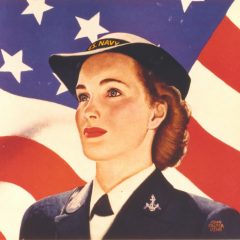
A Blog About Women Who Were Homefront Heroines: the WAVES of World War II
Our photo today comes from the National Archives. WAVES who just completed their training at the Cedar Falls boot camp relax on board the train as they head to their new assignments. The photo shows Mary M. Martin (left) and Mary Lou Gillen (right).
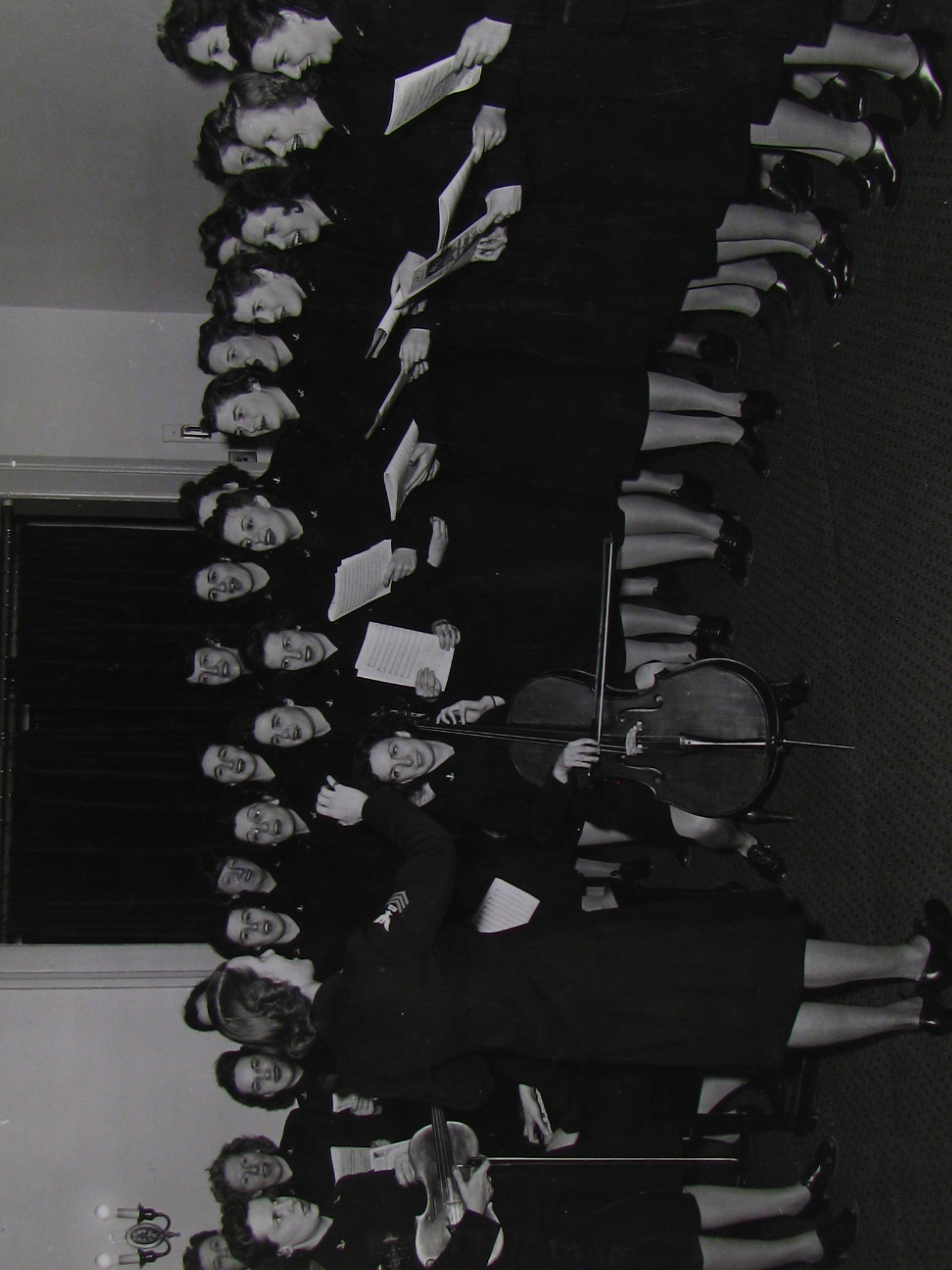
WAVE Ann Atridge leads a group of WAVES at the radio training school in Madison, Wisconsin, in rehearsal for their weekly radio broadcasts on a local radio station.
The photograph comes from the National Archives.
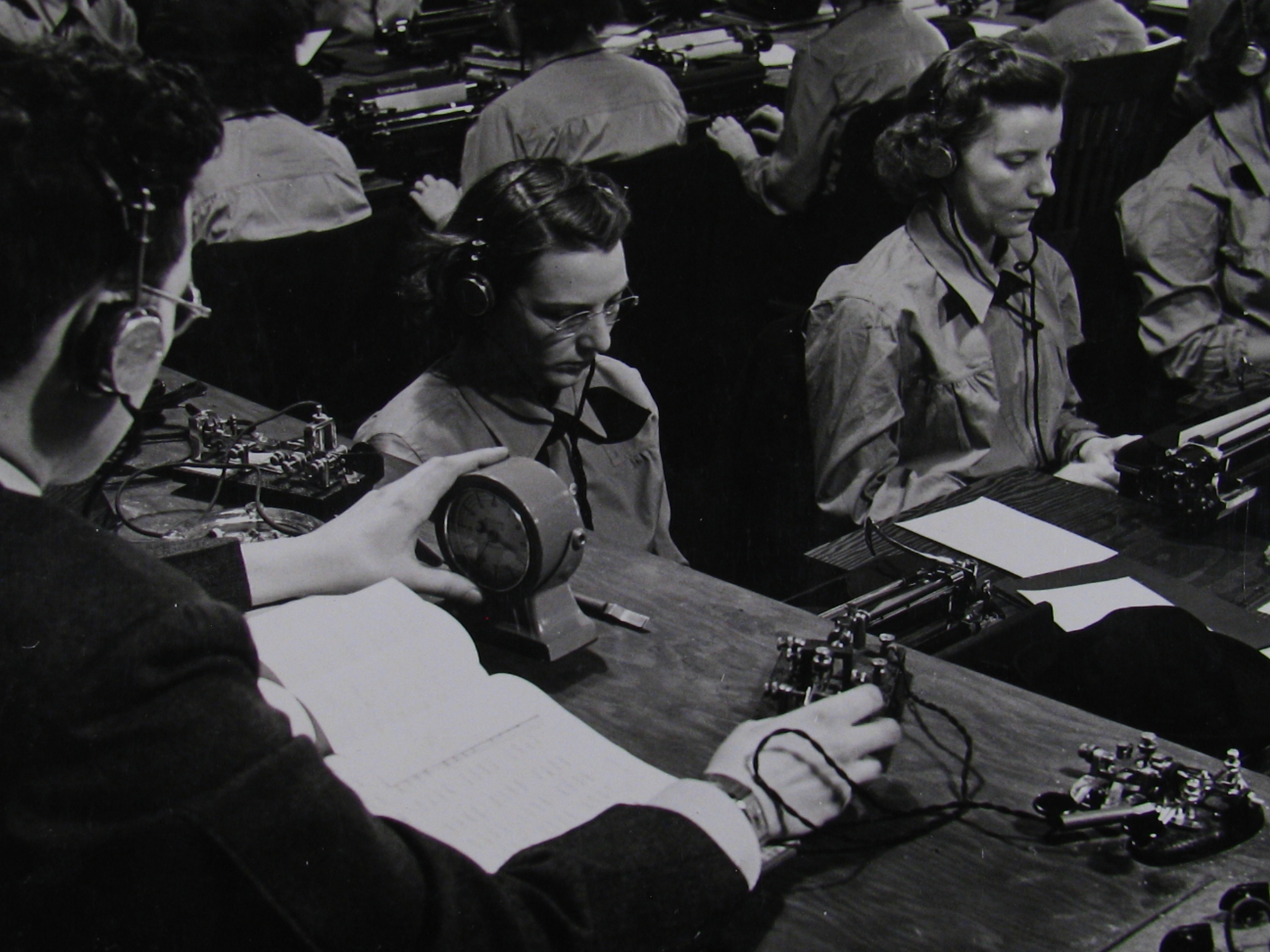
Radio coding class is in session, in this photograph from the National Archives. The University of Wisconsin Madison was one of the first training centers for WAVES to open, beginning in October of 1942.
In this photo, the instructor (in the foreground) carefully times his rate of sending coded messages with his timer, which is in his left hand.

WAVES at the University of Madison in Madison, Wisconsin, learned how to code and decode radio messages – both friend and foe. Here, a WAVE is practicing with the equipment.
The photograph comes from the National Archives.

Women in the classroom at the Women’s Reserve Naval Training School, Smith College, Northampton, MA.
The photograph comes from the National Archives.

It was 70 years ago today, October 6 1942, that the first full class of officers would come to Smith College for training in the WAVES. Northrup and Gillet Halls, shown here, were used as dormitories for that first class of officers.
The photograph comes from the National Archives.
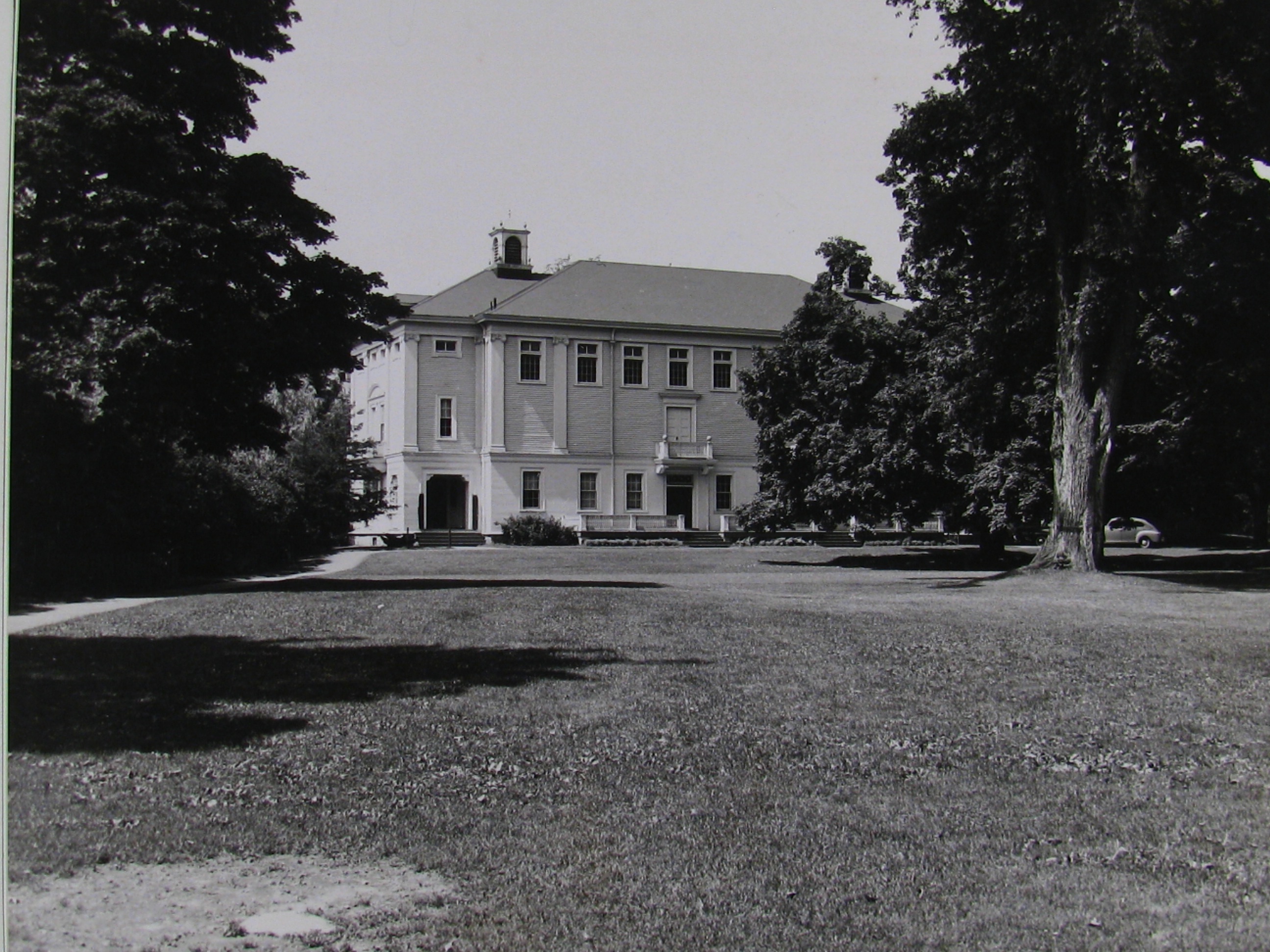
The WAVES took over a number of campus building for the training facility at Smith College in Northampton, Massachusetts, which brought in its first full class of officers in October 1942.
Paunce Hall, seen in the photograph above, was the WAVES principle recitation hall. The photo comes from the National Archives.

As WAVES went through separation from the Navy at war’s end, one thing they would learn is how to readjust to civilian life. Here, a “trained interviewer” provides former WAVE Recruiter Helen Kiley with that crucial information at a separation unit in New York City.
It comes from The Arthur and Elizabeth Schlesinger Library on the History of Women in America at the Radcliffe Institute for Advanced Study, Harvard University.

The Navy offered women a selection of fashionable hat choices for the post-war world, but also this reminder:
The most important personal lesson your Navy training can leave with you is the value of perfect grooming at all times. Brushed hair, neat hands, perfectly ordered clothing make any woman look right in her simplest costume. An no-one can be smart who is unpressed, untidy, not well put together.
From the booklet “Back to Civvies,” held by the The Betty H. Carter Women Veterans Historical Project at the University of North Carolina Greensboro.
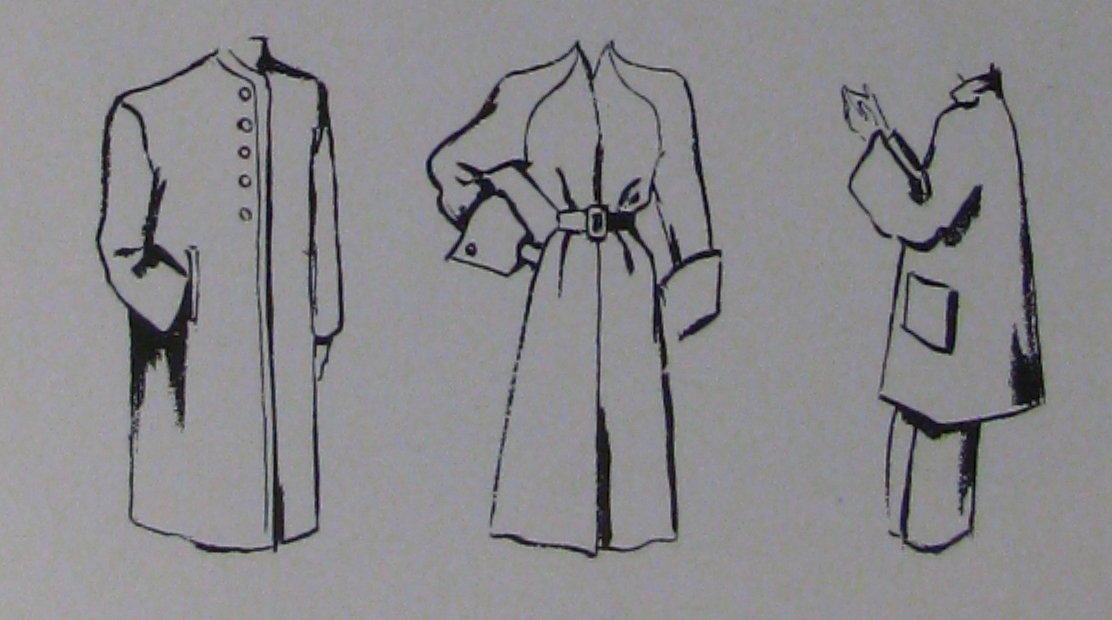
In general, your coat will have wide, rounded shoulders, deeper armholes, and if it is belted, it will be trimly pulled in. There are three chief types of coats, any of which may be fur-trimmed or plain. . .
- The boxy reefer, either short or long, but a far softer coat than its pre-war version you may have lived in.
- The short or long belted coat with a slightly fuller skirt.
- The short coat with a wide-swinging back.
From the booklet “Back to Civvies,” held by the The Betty H. Carter Women Veterans Historical Project at the University of North Carolina Greensboro.
 Hinges of History