Overseas

WAVES (and also the Coast Guard women, the SPARs) were able to be based not only to Hawaii, but also to Alaska and selected Caribbean locations.

They opened it up for women to go overseas, which was Hawaii and Alaska. And I didn’t want to go to Hawaii. I grew up on the ocean (in Oregon).  I didn’t want to go see the ocean. So I elected to go to Ketchecan (Alaska).  I was in Ketchecan for, I don’t know, six weeks. I was there long enough to turn around and come back to Seattle.

– Vicki Burdick Leach, World War II SPAR

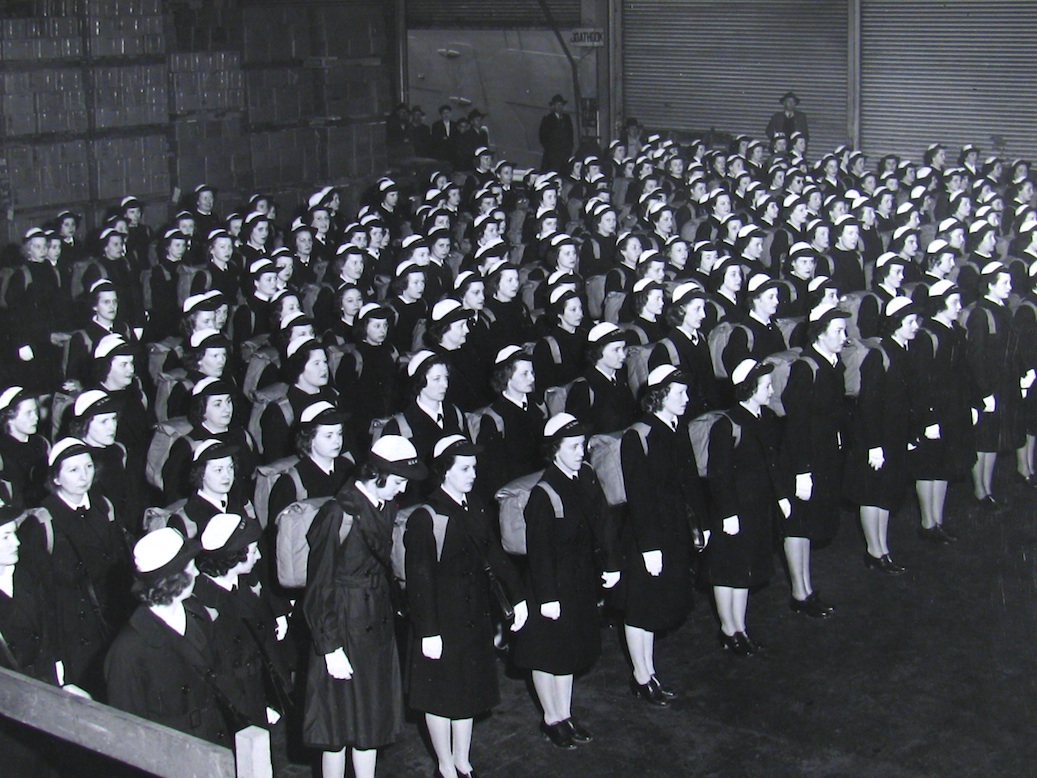
This image shows the first contingent of WAVES packed and ready to go ship to Hawaii in January of 1945. It comes from the National Archives.

Tropical Whites

WAVES heading to Hawaii would need uniforms fit for a more tropical environment. That meant the seersucker uniforms for work and tropical white uniforms for dress, instead of the every blues most women wore.

Here, WAVES are learning the protocol for wearing the white uniform, which most hadn’t had or needed before heading to Hawaii.  It dates from January 8, 1945, just before the women were scheduled to depart.

It comes from the National Archives.

Getting Picked

The post to Hawaii was very desirable for some. And not everyone was selected for overseas duty.

After I was in the service for six months, I could sign up for overseas.  My officer was Lt. Jerry Clays and he said, “Dottie, I know you have the time in, but I want a letter from your folks saying it’s OK to go overseas.”  He said, “I want a letter from your folks giving permission for you to go overseas.”  Well, by the time I got the letter back, and so forth, the war was over and so I never got to go overseas.

– Dorothy “Dottie” Anderson McDowll, WWII WAVE

This photograph shows WAVES leaving on their last stateside liberty before heading to Hawaii in January of 1945. It comes from the National Archives.

WAVES to Hawaii

Continuing our theme of Asian-Pacific Heritage month, we’re going to begin a series looking at the WAVES’ experience in Hawaii.

Initially, the WAVES were only allowed to serve stateside, but by late 1944 discussions began to expand their duties to overseas. And that included the then-US territory of Hawaii.

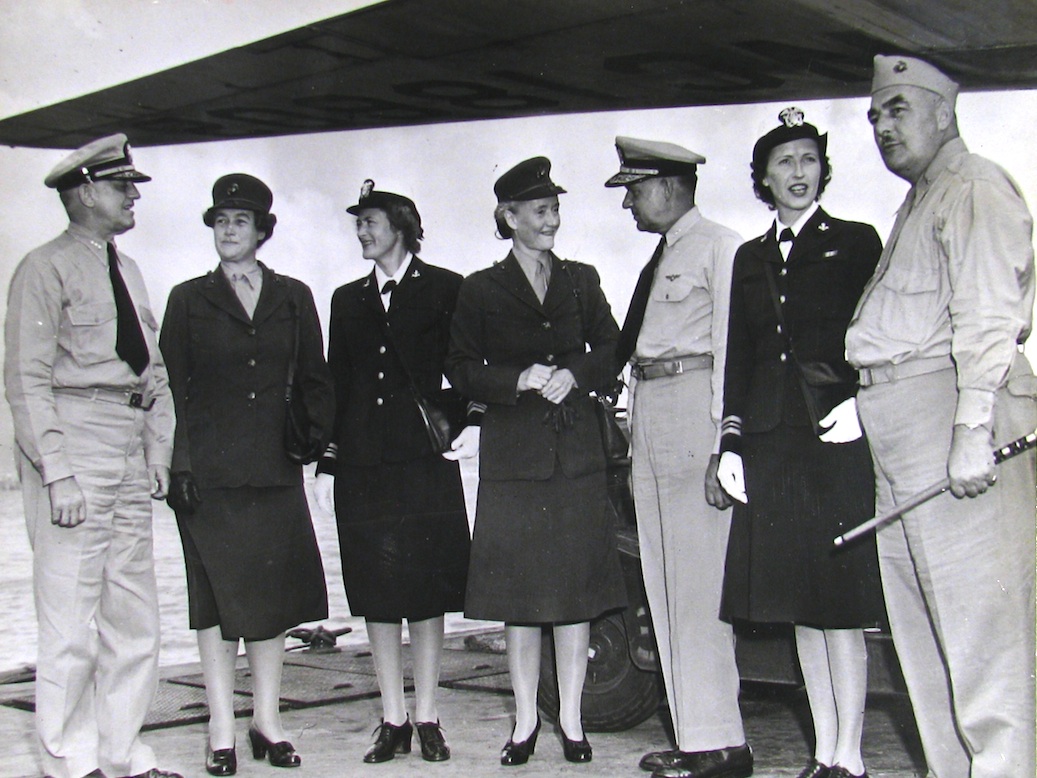
This image shows the first members of the Women’s Reserve of the Navy and Marine Corps doing a preliminary survey of the area in October of 1944 before sending female personnel.

The people shown are (from left): Vice Admiral Robert L. Ghermlevy, Colonel Ruth Street, Lieutenant Commander Jean T. Palmer, Major Marian B. Drydenyof, Vice Admiral John H. Towers, Lieutenant Commander Joy Bright Hancock, and Brigadier General L.W.T. Weller Jr.  It comes from the National Archives.
A Family Affair

Susan Ahn Cuddy’s two brothers, Phillip and Ralph, also joined the military.

I was Korean blood.  We were fighting the Japanese. I was American. I was very American, raised to love and honor America. There was actually no choice. I mean that was it. Why other women didn’t do it, I don’t know.

This is a photograph of Ahn and her brothers in uniform. It comes from the collection of Susan Ahn Cuddy and the Island Mountain Trading Co.

Naval Security

After Susan Ahn Cuddy graduated from Smith College officer training school, she was sent to work in Naval intelligence after Secretary of the Navy James Forrestal saw her at an event. But initially the brass in Naval intelligence weren’t so certain about having an Asian woman in their midst.

The captain of the station was appalled. He couldn’t believe that this Asian was on his station So for six months I didn’t do anything, but file.  And then after that, he was still nervous.

Ahn eventually became the Navy liaison with the Library of Congress, and after the war would continue working in the intelligence community, in the National Security Agency.

This photograph of Ahn and an unnamed sailor comes from the collection of Susan Ahn Cuddy and the Island Mountain Trading Co.