What We’re Thankful For, Part I – The Four Freedoms

In January of 1941, months before the United States would become officially involved in World War II, President Franklin Roosevelt gave one of his radio addresses.

Roosevelt was an innovator in using mass media to help bring his message to the public. His speech about the banking crises in 1933 was the first time a President had used the power of the radio to speak directly to the American public (in this case to attempt to stop the bank runs which nearly destroyed the nation’s economic system in 1933).  That speech would lay the groundwork for the Fireside Chats, 31 radio addresses on a variety of topics, ranging from the New Deal to the War in Europe.

The Four Freedoms speech wasn’t one of those Fireside Chats. It was the official State of the Union Address for 1941. But it nonetheless illustrates Roosevelt’s skill at using the public airwaves to speak to the American public:

In the future days, which we seek to make secure, we look forward to a world founded upon four essential human freedoms…That is no vision of a distant millennium. It is a definite basis for a kind of world attainable in our own time and generation. That kind of world is the very antithesis of the so-called new order of tyranny which the dictators seek to create with the crash of a bomb. To that new order we oppose the greater conception—the moral order. A good society is able to face schemes of world domination and foreign revolutions alike without fear.

Roosevelt included two Constitutionally-mandated freedoms (Freedom of Speech and Freedom of Worship) in his speech, and then added two freedoms which he said should be a part of the social contract we have with our fellow Americans. Freedom from Want means that Americans shouldn’t go hungry or be without basic human needs (food, shelter, etc.) – and that a modern society had a responsibility to provide for those in need.  Freedom from Fear means that we should live in a country where we don’t have to worry about our safety. Roosevelt went on to say that these weren’t just American values, but should be values available to everyone in the world.

The Four Freedoms would later be illustrated by Norman Rockwell in a series of drawings for the Saturday Evening Post.

The Four Freedoms wasn’t a Thanksgiving speech, but nonetheless we’re thankful this time of year for Roosevelt and his identification of the Four Freedoms.

11/11/11

Seventy years ago today, America wasn’t officially involved in World War II.  In less than a month, the country would be. The Japanese attack on Pearl Harbor would thrust the United States into the war and transform the country.

This is a photograph of my (Homefront Heroines Director Kathleen Ryan) mother, Mary Marovich Ryan. It was taken after she enlisted in the WAVES. She came from a large family and grew up on the south side of Chicago. They didn’t have much – it was the Depression and there were a lot of mouths to feed.

But as the war enlisted all of her brothers – except for her younger brother who was too young to join up – enlisted in the military. They joined the Army and the Coast Guard. Two of her brothers joined together. By the time my mother enlisted, every member of her family was in the service, except for that younger brother and a sister who was married with a young child (her younger brother would serve during the Korean War). I love her quote in the article below about wanting a six star pin so she can honor her brothers.

Those of you who have been following the Homefront Heroines project know that my mother didn’t talk much about her military service. I knew that enlisted in mid-1943. She went to New York for boot camp, and then traveled across country on a train to head to her specialty training at a Naval Hospital in California as a pharmacist’s mate. A pharmacist’s mate helped out in various  medical capacities; my mother actually worked in the pharmacy. She was stationed at Treasure Island in San Francisco where she met my father, a pilot in the Army Air Forces. She was decommissioned shortly after V-J Day, and she and my father eventually settled about an hour north of New York City in a town along the Hudson River.

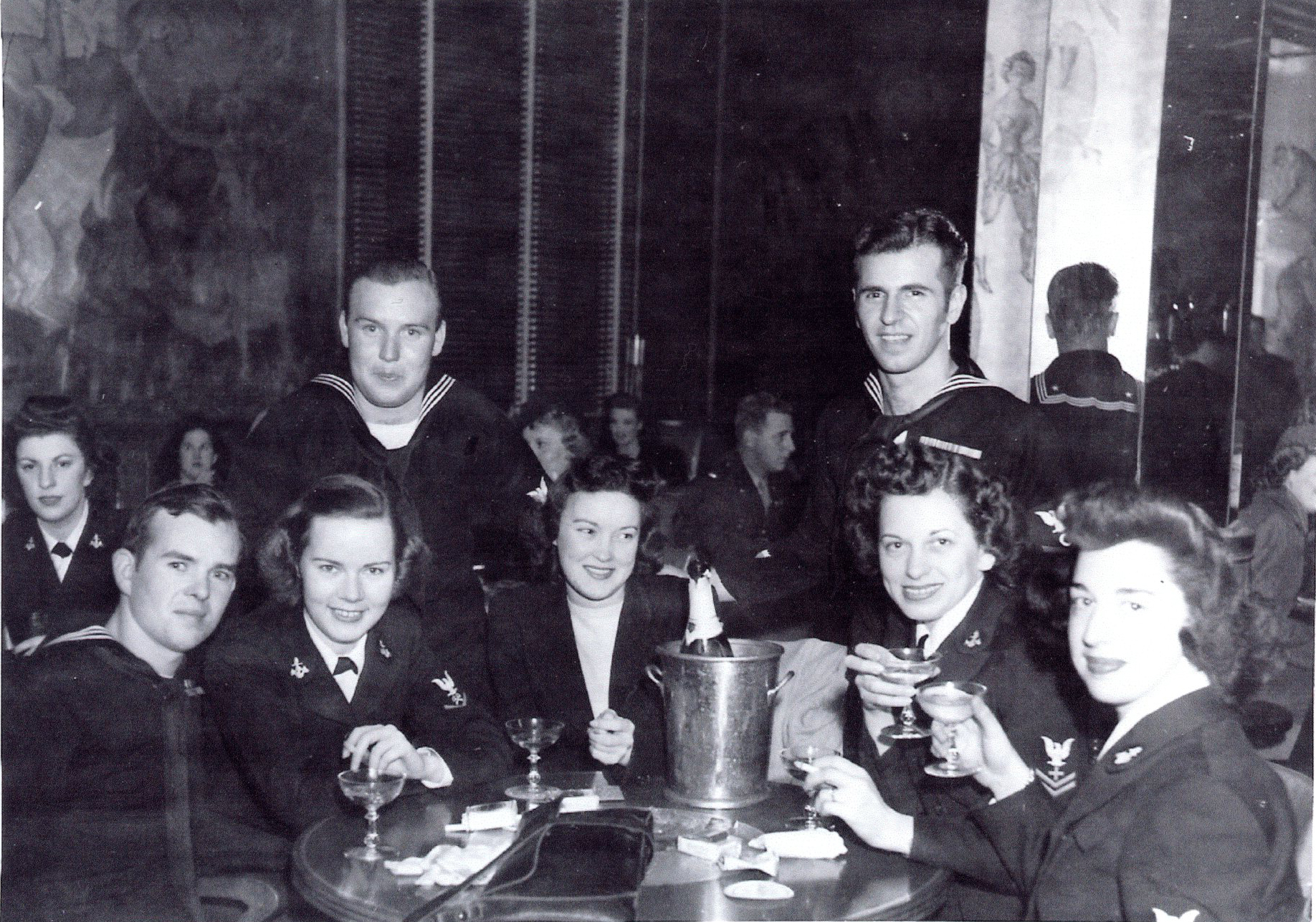
But she kept things. Like these photographs (including the one above of a celebration at the Fairmont Hotel in San Francisco with a group of friends) and the articles about her service. Or a book discussing the properties of various prescription drugs. Or gloves. Dozens of pairs of white cotton gloves, which were part of the formal WAVES uniform. And before she died, she asked that she be buried with military honors, commemorated by a headstone listing her dates of service.

On this Veteran’s Day, we salute all of those who offered their service to our country, including those Homefront Heroines who blazed a trail for women in the future – in the military, of course, but also in the civilian workplace.

Boot Camp and Beyond

In the spring of 1943 Hunter College in the Bronx, N.Y. (now Lehman College), opened a WAVES training school.  Women were sent here for boot camp where they learned things like Naval history and marching.  They also took placement tests to find out which Navy jobs best suited their skills.

Homefront Heroines is experimenting with a new model of storytelling. We’re creating exhibits geotagged with the location of various locations important to the WAVES, like Hunter College, its buildings and surrounding apartments, with TagWhat –  as discussed in this previous post.  The posts will include video footage, interviews and interesting stories about the WAVES.

Irene Bendnekoff is one of the women we’re featuring:

So what does this mean? Check out the full exhibit here, or download the TagWhat app on your smartphone, head to the Bronx. The exhibit will pop up on your phone – you can see the WAVES’ story while your at a location important to the WAVES!  We love this method of storytelling and would love to know what you think.

Learn about the placement process, training facilities, and hear the stories of many of these WAVES in this Specialty Training exhibit.

Vogue’s Best Dressed Women

If you talk to one of World War II’s Navy WAVES, you are going to hear about her designer uniform.  The Navy was already known for having “sharp”-looking uniforms for men and with the creation of the WAVES, a lot of thought went into making an appealing uniform for women.  The women took great pride in the comfort, quality make and fashion of their Mainbocher-designed dress.

Fashion designer Main Bocher opened his own shop as an American in Paris in 1929.  He became a sensation in Europe and the United States, with many wealthy clients in both places including the Dutchess of Windsor.  His clothing was beyond what many WAVES could have afforded which is another reason they became prized possessions.

(Main Bocher)
(One of Mainbocher’s most famous designs made famous by Horst’s photo – “Mainbocher Corset”)

The WAVES uniforms were so trendy that in 1943 the WAVES and other women in uniform were named as Vogue’s “Best Dressed Women in the World Today.”

Check out this Exhibit on the uniform identity of the WAVES to learn more.

Does She Have What it Takes?

Not just any woman could get into the WAVES.  These ladies had to make the cut and after being accepted they went through a rigorous training process before becoming active duty members or officers. WAVES had to take a placement test, a physical fitness test, and had to submit letters of recomendation among other requirements (requirements for the WAVES).

Those who were accepted and enlisted became heroic figures in their hometowns and newspaper articles were written about their recruitment.

Some women did not graduate boot camp and were sent home.  Read about “washing out,” or failure here.

But those who did make it … went on from Hunter College, Smith College, Cedar Falls or wherever they trained to members of the U.S. Navy – a whole new realm for women of their time period. The ones who made the cut became the hinges of history.


Learn more about the training process and transition to military life by visiting the “Recruits to Boots” exhibit.

Creating the WAVES

Charles Darwin said, “It is not the strongest of the species that survives, nor the most intelligent, but the one most responsive to change.”  Regardless of some of the theological debates about Darwin’s theory of evolotion, it seems this particular statement has proved true, particularly in the last century.  Yet people can still be resistant to change.

Not everyone was supportive of the Navy, and other branches of government, giving women active duty positions during the war.  In a previous post Janette Alpaugh shared a story about a cold encounter with a woman who was not a fan of the WAVES.

The establishment of the WAVES did not happen overnight.  The process was pioneered by several influential women.  Read more about them and the creation of the WAVES in this exhibit.

Why Women Choose the Military

Today approximately 20 percent of all new military recruits are female and 11 percent of the U.S. forces deployed to Iraq and Afghanistan have been women. (Iraq and Afghanistan Veterans of America)

Why do women choose military service?  Here’s what Army First Lieutenant Jessica Scott, contributor to the PBS “Regarding War” blog,  says:

” There are a number of things that the military offers that makes joining and staying in the military attractive for women and men alike. According to the Defense Department Advisory Committee on Women in the Services’s Annual Report for 2008, the number one reason women stayed in the military was their sense of job satisfaction and job performance. Other reasons for women to stay in the military included access to health care, education opportunities, a sense of purpose and being part of a team. “

To read her full article click here.

Joining the service in the ’40s was a different story.  Taking the same jobs in the Navy as men had never happened before, the WAVES were breaking out of traditional roles and looking for a way to get involved in the war effort.

Pearl Harbor was a milestone for many WAVES in their decision to join.  Read more about women’s roles in society and the military before WWII on the Homefront Heroines site exhibit “Before the Waves.” 

Recruitment Posters Through Time

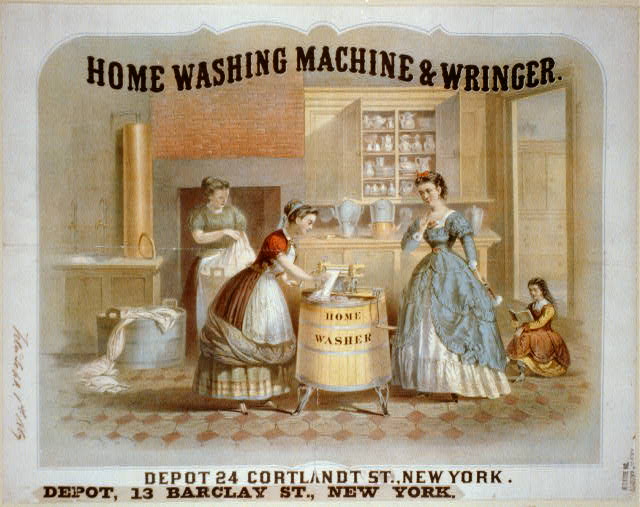
If you’ve been to the movies recently, you may have noticed ads among the previews for the Marines or the Navy SEALS.  The U.S. military has always used mass media to recruit.

Starting in the Revolutionary War:

Photobucket(Courtesy of historyiscentral.org)

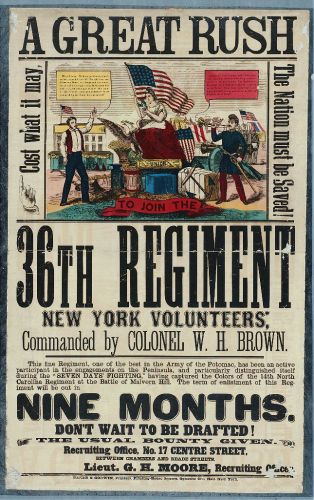
The Civil War:

Click Here for an article from the Atlantic on Civil War recruitment posters and more detail about the one shown above

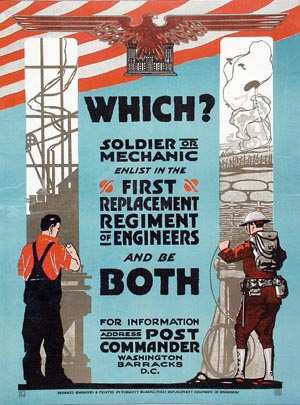
World War I:

(Courtesy of North Carolina state archives)

And of course in World War II:


(Courtesy of University of North Texas)

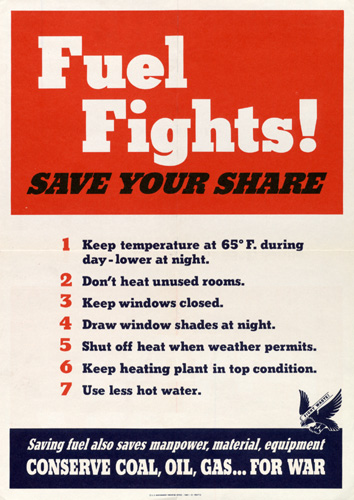
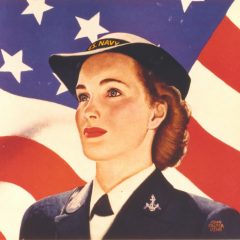
Posters played a significant role in World War II, not only to recruit, but to encourage involvement and support from civilians. WAVES recruitment posters were sending specific messages to women. Many who joined the service discovered the WAVES because of their placement in papers, on billboards, etc.

Our Website features an exhibit all about recruitment posters. See quotes from women interviewed and learn more about wartime propaganda.

World War II and Sacrifice

Here are some interesting facts and figures about public sacrifice during World War II:

1. The tax rate for most Americans averaged about 20%. For the richest Americans, the tax rate ranged between 80 and 94%. The government framed taxes as a patriotic duty so that the county could pay for a war on multiple fronts (Europe, Africa, The Pacific) and end that war quickly. American involvement in World War II lasted from December 1942 through August of 1945; the last troops were demobilized by 1946.

2. People were asked to change their eating habits in order to help preserve more essential food for American troops. Things like sugar, butter and meat were all in short supply to the average public. People received ration coupons, which they used when purchasing items.

3. And it wasn’t just eating, People were also limited as to the amount of gasoline they could purchase. By the end of 1942, more than half of the vehicles in the country were limited to just four gallons of fuel a week (cars on average got about 15 MPG). War workers and other “essential” personnel could get more gasoline, but the vast majority of the public was limited in terms of personal driving.

4. Other industrial goods were also rationed. Tires were the first, because most rubber came from the Dutch East Indies, which was controlled by Japan. But steel was also crucial to the war effort. Consumer car production during the war was suspended. Manufacturers looked for alternate ways to package caned food goods.

5. People coped. Magazines discussed ways to use soy and other non-traditional products as meat and sugar substitutes. People planted Victory Gardens, backyard or neighborhood gardens where they could get unlimited amounts of vegetables for the dinner table.

6. Since people couldn’t drive, they turned to mass transportation, which was provided by both cities and towns as well as private companies. Buses served communities large and small across the country, offering a way to get from one place to another. Train service was also more extensive. Americans used mass transit in record numbers, hitting a peak of 23.4 billion riders in 1946. Carpooling was also encouraged.

7. There were other government-mandated restrictions. The government Office of Price Administration froze prices on many raw manufacturing materials in order to stave off inflation which is often common during the war. Women’s hemlines were raised so as to save fabric. People living near the coasts used blackout curtains to keep the cities dark in case of an attack.

8. Men between 18 and 64 had to register for the military draft, and men between 18 and 45 were immediately eligible for induction. Draftees would serve in the U.S. Army and Marine Corps. But people also enlisted for the various services (the Navy was an all-volunteer branch), largely to be in control of their own destinies. About 12 million people were serving in the U.S. military at its peak strength in 1945.

9. Unlike the Depression, when the unemployment rate was around 20%, people were working during World War II. The unemployment rate was less that 2% for most of the war. Stateside people were employed by the military and other government agencies or worked in war production plants (in addition to other businesses, shops, schools, etc., which remained open during the war).  People had a pent up urge to spend the money they made.

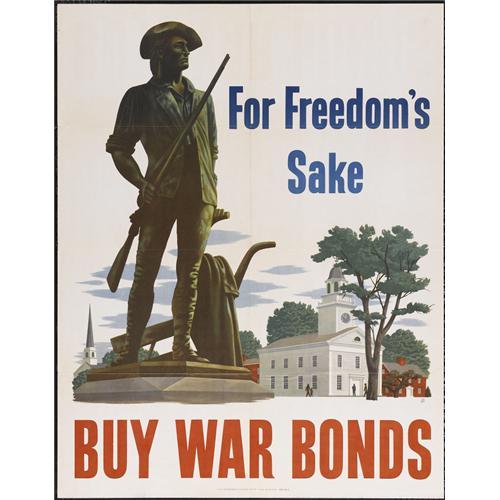
10. So, the government asked people to buy War Bonds, essentially helping to financially support the war OVER AND ABOVE the taxes they paid. Bonds matured in 10 years and sold at 75% of their value. Bond sales totaled $185.7 BILLION during the war, and more than 85 million Americans — half the population — purchased them.

New Website!

After loads of work, our new website is up and running. We have lots of new exhibits, including audio and video snapshots from women who served as WAVES and SPARs, plus a trailer or two from the upcoming film. Check it out www.homefrontheroines.com.

We also are experimenting with a new fundraising platform to help us with the film’s post production and web site maintenance. It’s call “Supporter Wall” and it allows people to visually see who has backed the project – so far all of our backers are from our Kickstarter campaign. This project has been funded mostly by some small grants and lots of sweat equity. So any help we can get to tell the story of these fabulous women is most appreciated!