Why Women Choose the Military

Today approximately 20 percent of all new military recruits are female and 11 percent of the U.S. forces deployed to Iraq and Afghanistan have been women. (Iraq and Afghanistan Veterans of America)

Why do women choose military service?  Here’s what Army First Lieutenant Jessica Scott, contributor to the PBS “Regarding War” blog,  says:

” There are a number of things that the military offers that makes joining and staying in the military attractive for women and men alike. According to the Defense Department Advisory Committee on Women in the Services’s Annual Report for 2008, the number one reason women stayed in the military was their sense of job satisfaction and job performance. Other reasons for women to stay in the military included access to health care, education opportunities, a sense of purpose and being part of a team. “

To read her full article click here.

Joining the service in the ’40s was a different story.  Taking the same jobs in the Navy as men had never happened before, the WAVES were breaking out of traditional roles and looking for a way to get involved in the war effort.

Pearl Harbor was a milestone for many WAVES in their decision to join.  Read more about women’s roles in society and the military before WWII on the Homefront Heroines site exhibit “Before the Waves.” 

Recruitment Posters Through Time

If you’ve been to the movies recently, you may have noticed ads among the previews for the Marines or the Navy SEALS.  The U.S. military has always used mass media to recruit.

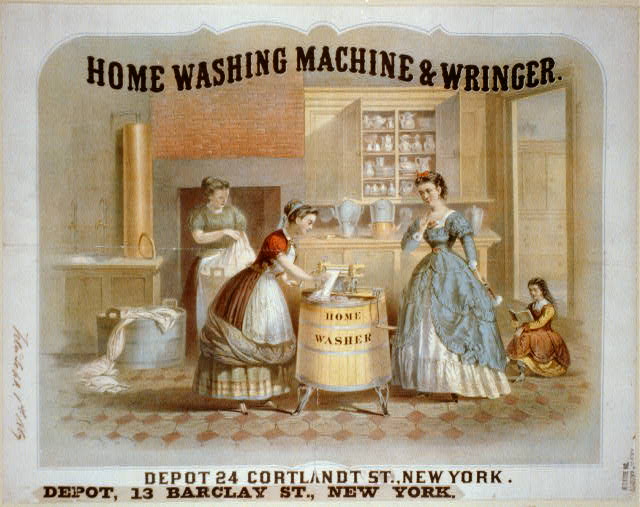
Starting in the Revolutionary War:

Photobucket(Courtesy of historyiscentral.org)

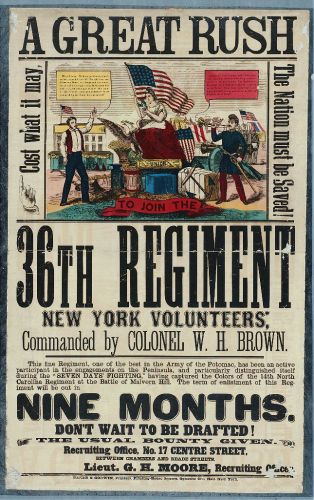
The Civil War:

Click Here for an article from the Atlantic on Civil War recruitment posters and more detail about the one shown above

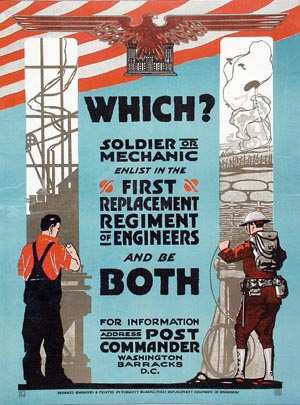
World War I:

(Courtesy of North Carolina state archives)

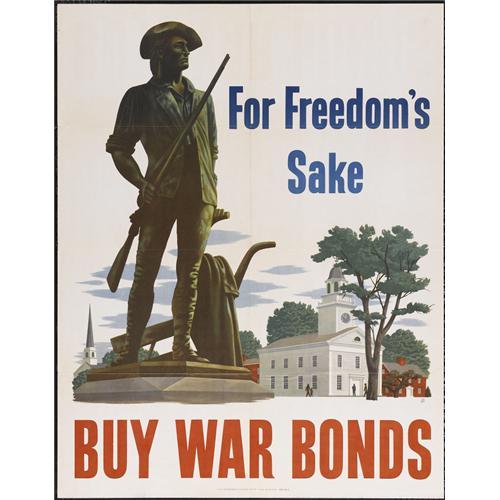
And of course in World War II:


(Courtesy of University of North Texas)

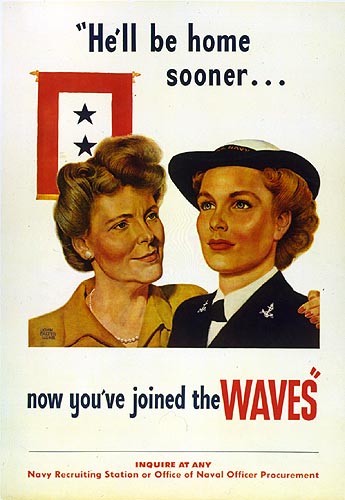
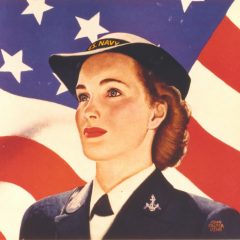
Posters played a significant role in World War II, not only to recruit, but to encourage involvement and support from civilians. WAVES recruitment posters were sending specific messages to women. Many who joined the service discovered the WAVES because of their placement in papers, on billboards, etc.

Our Website features an exhibit all about recruitment posters. See quotes from women interviewed and learn more about wartime propaganda.

World War II and Sacrifice

Here are some interesting facts and figures about public sacrifice during World War II:

1. The tax rate for most Americans averaged about 20%. For the richest Americans, the tax rate ranged between 80 and 94%. The government framed taxes as a patriotic duty so that the county could pay for a war on multiple fronts (Europe, Africa, The Pacific) and end that war quickly. American involvement in World War II lasted from December 1942 through August of 1945; the last troops were demobilized by 1946.

2. People were asked to change their eating habits in order to help preserve more essential food for American troops. Things like sugar, butter and meat were all in short supply to the average public. People received ration coupons, which they used when purchasing items.

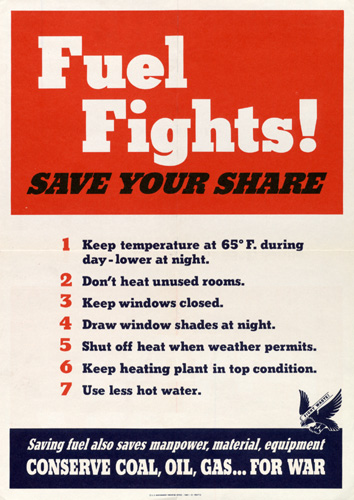
3. And it wasn’t just eating, People were also limited as to the amount of gasoline they could purchase. By the end of 1942, more than half of the vehicles in the country were limited to just four gallons of fuel a week (cars on average got about 15 MPG). War workers and other “essential” personnel could get more gasoline, but the vast majority of the public was limited in terms of personal driving.

4. Other industrial goods were also rationed. Tires were the first, because most rubber came from the Dutch East Indies, which was controlled by Japan. But steel was also crucial to the war effort. Consumer car production during the war was suspended. Manufacturers looked for alternate ways to package caned food goods.

5. People coped. Magazines discussed ways to use soy and other non-traditional products as meat and sugar substitutes. People planted Victory Gardens, backyard or neighborhood gardens where they could get unlimited amounts of vegetables for the dinner table.

6. Since people couldn’t drive, they turned to mass transportation, which was provided by both cities and towns as well as private companies. Buses served communities large and small across the country, offering a way to get from one place to another. Train service was also more extensive. Americans used mass transit in record numbers, hitting a peak of 23.4 billion riders in 1946. Carpooling was also encouraged.

7. There were other government-mandated restrictions. The government Office of Price Administration froze prices on many raw manufacturing materials in order to stave off inflation which is often common during the war. Women’s hemlines were raised so as to save fabric. People living near the coasts used blackout curtains to keep the cities dark in case of an attack.
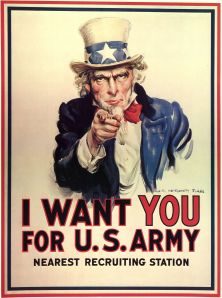
8. Men between 18 and 64 had to register for the military draft, and men between 18 and 45 were immediately eligible for induction. Draftees would serve in the U.S. Army and Marine Corps. But people also enlisted for the various services (the Navy was an all-volunteer branch), largely to be in control of their own destinies. About 12 million people were serving in the U.S. military at its peak strength in 1945.

9. Unlike the Depression, when the unemployment rate was around 20%, people were working during World War II. The unemployment rate was less that 2% for most of the war. Stateside people were employed by the military and other government agencies or worked in war production plants (in addition to other businesses, shops, schools, etc., which remained open during the war).  People had a pent up urge to spend the money they made.

10. So, the government asked people to buy War Bonds, essentially helping to financially support the war OVER AND ABOVE the taxes they paid. Bonds matured in 10 years and sold at 75% of their value. Bond sales totaled $185.7 BILLION during the war, and more than 85 million Americans — half the population — purchased them.

New Website!

After loads of work, our new website is up and running. We have lots of new exhibits, including audio and video snapshots from women who served as WAVES and SPARs, plus a trailer or two from the upcoming film. Check it out www.homefrontheroines.com.

We also are experimenting with a new fundraising platform to help us with the film’s post production and web site maintenance. It’s call “Supporter Wall” and it allows people to visually see who has backed the project – so far all of our backers are from our Kickstarter campaign. This project has been funded mostly by some small grants and lots of sweat equity. So any help we can get to tell the story of these fabulous women is most appreciated!


More Vargas

While searching for some images of the Women’s Army Auxiliary Corps (WAAC), we came across this image. Like the Vargas Navy calendar girl we showed earlier in the week, this image too comes from Esquire. The WAAC is from their 1943 calendar (the WAVE from 1944).

Her poem reads:

A Merry Christmas to you elf! I’m off to join the WAACs. And serve the country that I love until the Axis cracks.

Women, War and Peace

Yes, we’re taking a line from the upcoming PBS series in today’s missive. But the announcement in the wee hours of the morning (local time) that a trio of women campaigning for peace in Africa and the Arab world had won the 2011 Nobel Peace Prize made us think that this is a good topic for today.

Ellen Johnson Sirleaf of Africa is Libera’s first elected female president (a feat we have yet to accomplish in the United States) and her choice is controversial. She’s a leader who is in the midst of a heated election campaign in her home country and who is much more admired abroad than in Liberia. Her fellow countrywoman, Leymeh GBowee, is the head of the Women for Peace movement, and was lauded for reaching across religious boundaries to unite Muslim and Christian women against the warlords who dominate Liberia. The third woman, Tawakul Karman of Yemen, is a pro-democracy demonstrator who was instrumental in the events of the Arab Spring.

So why should a blog about World War II veterans concern itself with peace prizes? Because these women, like the women we’ve talked to about their World War II experiences, were agitating for change. Some saw their wartime roles as a temporary sacrifice which would ultimately result in a shorter war, others saw joining the military as a way to prove that women could to the same work men did (and get paid the same).

Congratulations to this year’s Nobel Prize winners.

Va-va-va-Vargas

The World War II-era pin-up art is quite amazing. It’s no surprise that scholars like Walt Reed have dubbed the era “the golden age” of the pin-up.  Think about it: pin-ups were everywhere, from magazines like Esquire to the noses of planes to even personal snapshots (check out our friend Maria Elena Buzek’s fascinating book Pin-Up Grrls for a discussion of that phenomena). The director’s mother – the WAVE who inspired this project – had a collection of drawings she did during the war era of women in pin-up guise. They were everywhere.

This is a recruitment poster for the WAVES and SPARs done by pin-up artist George Petty. Petty was the “establishment” when it came to pin-ups – he pretty much created the famous Esquire pin-up centerfolds. But when he left the magazine in 1940, his role was taken over by an young upstart, Antonio Vargas.  His pin-ups (dubbed “Varga Girls”) made the Petty pin-ups look tame by comparison: buxom, long legs, tiny waists – to contemporary eyes a combination of Barbie doll and Playboy centerfold.

This image came from a calendar Esquire ran during the war – which featured a WAVE-to-be. The poem alongside her reads:

I’m going to join the Navy WAVES and help the war to halt, and also show my Navy beau that I am worth my “Salt!”

Vargas also did the SPARs recruitment poster, below.

Oral History, Photography

This blog began as a way to share stories and photographs about the women who served in the WAVES of World War II. We’ve veered from that a bit recently, but today we wanted to get back on topic (of sorts).

A new book is out on the topic of oral history and photography. Shameless plug: Homefront Heroines director Kathleen Ryan has a chapter in the book. She talks about how the women she’s interviewed use photographs to help in their storytelling – and how certain photographs, like stories, can become a part or our memories (and that storytelling when used with photographs can make the memory “stick” even more firmly than without). There are a lot of other really interesting essays in the book as well.

Kind of what we’re doing here in the blog, no?

Public Domain, Copyright and Other Issues

So we’re chugging along on the film and various ancillary projects and this discussion came up with our Production Assistant today (Laura, who’s temporarily stepped aside from the wonderful work she’s been doing on the blog to work on the Homefront Heroines TagWhat project): when does something move into the public domain?

We’re considering works originally published during World War II, films and newsreels for the most part. According to copyright law, the works might be in the public domain. Then again, they might not. It all depends upon if the copyright was renewed or not. If it wasn’t, the work is in the public domain. If not, a film produced in 1944 would remain copyright protected until 2039.

We understand (and fully support) copyright protections. It keeps the creator of the work in control of how the work is distributed.  That’s a good thing. However, where it gets muddy is when a corporation uses film produced by a public entity, such as the U.S. government, and then masks its production of the film in copyright. We’re running into that issue with newsreels right now. Much of the footage is government produced – yet the copyright in some cases is held by a film studio. Or, a film produced by a studio has fallen out of copyright, but the production company who repackages the material claims they have “copyright” on the production. Not exactly. On the DVD packaging, yes. On the film itself, not so much.

Muddy areas. Frustrating areas. And all of it is complicated by the web and the publishing that occurs therein.

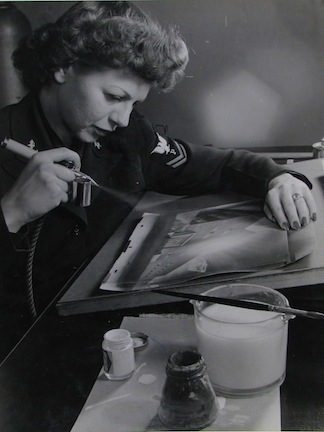
That being said, this photo is produced by the U.S. Navy. We’re sharing it with you because it is “owned,” as it were, by the U.S. public.

WAVE Airbrushes Photo

Navy WAVE Airbrushes Photo

at Navy Art & Animation Division

So Women Can’t Write About War, Huh?

The Guardian UK published a piece Friday from author Julia Lovell where she talks about “common knowledge” in publishing that women can’t write about war. In it, she argues (quiet compellingly, I might add) that the view of military history as only being about explosions and battlefields is in fact an old fashioned model of military history. A more contemporary view, she says, is to think about military history as a multidisciplinary field, which embeds “political, social, cultural and personnel contexts.” In other words, war is about more than just battles.

Yet “we” don’t want to hear that. I’ve been told that the everyday stories of the WAVES I’ve interviewed are just anecdotes, and not really “important” history.  Or (horrors!) the stories are told in a way which is too conversational and attempts to reach to a larger audience, so so clearly can’t be “proper” history. The criticism seems to echo what the women have told me frustrates them about the World War II histories they’ve seen: it’s evident their story isn’t really worth telling (at least to the powers that be).

Hospital Corps

The larger story of war, of course, is all about the minutiae. The battles and explosions are few and far between when compared with the everyday: the people who work behind the scenes to make sure the troops on the front lines have what they need, the waiting and training in between the fights, the political machinations as each side jockeys for position. One women we spoke with described her military group as something closer to the to sarcastic cut-ups of M*A*S*H than the heroic portrayal by Tom Brokaw of The Greatest Generation. Others talk about the waiting, the boredom, the crushing dullness of the day-in-day-out sameness as their wartime experience. They challenge our notion of what heroism is. And, yes, their experiences, even the minutiae, can change the course of the world.

So why is there such a resistance to tell that story?